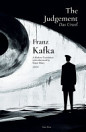
About this ebook
This edition also contains two rare short stories; The Neighbor and Poseidon, both published posthumously 1931 and written around 1912.
The story is written in a detached, almost observational tone, describing a central figure, "he," whose actions and existence seem constrained by vague, external forces. This has obvious references to Dostoevsky's faceless character in Notes from Underground, a story style he takes from Dostoevsky and uses across many works. The focus is on the character's lack of agency and the ambiguous relationships between "he" and the surrounding environment. The story's sparse details invite a wide range of interpretations, giving attention to themes of individuality, social pressures, and existential uncertainty. The story shows Kafka's ability to distill philosophical questions into minimalist prose. The absence of a clear plot or resolution adds to the piece's unsettling quality, leaving readers to grapple with its ambiguities. The unstructure, brief story functions as a meditation on the nature of selfhood and the often inexplicable dynamics between individuals and the systems or expectations that shape their lives.
He is presented in a modern translation from the original German, using clear contemporary English. The volume pairs He with an afterword, a timeline of Kafka's life and works alongside of the historical events which shaped his art, and a short biography.