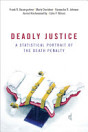
Deadly Justice: A Statistical Portrait of the Death Penalty
Nov 2017 · Oxford University Press
star
3 reviews
Ebook
272
Pages
family_home
Eligible
info
About this ebook
In 1976, the US Supreme Court ruled in Gregg v. Georgia that the death penalty was constitutional if it complied with certain specific provisions designed to ensure that it was reserved for the 'worst of the worst.' The same court had rejected the death penalty just four years before in the Furman decision because it found that the penalty had been applied in a capricious and arbitrary manner. The 1976 decision ushered in the 'modern' period of the US death penalty, setting the country on a course to execute over 1,400 inmates in the ensuing years, with over 8,000 individuals currently sentenced to die. Now, forty years after the decision, the eminent political scientist Frank Baumgartner along with a team of younger scholars (Marty Davidson, Kaneesha Johnson, Arvind Krishnamurthy, and Colin Wilson) have collaborated to assess the empirical record and provide a definitive account of how the death penalty has been implemented. Each chapter addresses a precise empirical question and provides evidence, not opinion, about whether how the modern death penalty has functioned. They decided to write the book after Justice Breyer issued a dissent in a 2015 death penalty case in which he asked for a full briefing on the constitutionality of the death penalty. In particular, they assess the extent to which the modern death penalty has met the aspirations of Gregg or continues to suffer from the flaws that caused its rejection in Furman. To answer this question, they provide the most comprehensive statistical account yet of the workings of the capital punishment system. Authoritative and pithy, the book is intended for both students in a wide variety of fields, researchers studying the topic, and--not least--the Supreme Court itself.
In 1976, the US Supreme Court ruled in Gregg v. Georgia that the death penalty was constitutional if it complied with certain specific provisions designed to ensure that it was reserved for the 'worst of the worst.' The same court had rejected the death penalty just four years before in the Furma...
Discover more
Ratings and reviews
3 reviews

Sofia Saavedra De La Hoz
- Flag inappropriate
April 10, 2026
Deadly Justice is an excellent textbook that stands out because it makes a difficult topic like the death penalty fascinating while still being grounded on facts. The best thing about it is that it's not only about morals or principles. It doesn't only illustrate how the system works in theory; it shows how it operates in actual life. It was really beneficial to talk about major Supreme Court cases like Georgia v. Furman and Georgia v. Gregg. These cases talk about what the system was supposed t
About the author
FB: Professor of Political Science, University of North Carolina; author of many books for Princeton UP and the U of Chicago Press MW: Student, UNC KJ: Student, UNC AK: Student, UNC CW: Student, UNC
FB: Professor of Political Science, University of North Carolina; author of many books for Princeton UP and the U of Chicago Press MW: Student, UNC KJ: Student, UNC AK: Student, UNC CW: Student, UNC
Rate this ebook
Tell us what you think.
Reading information
Smartphones and tablets
Install the Google Play Books app for Android and iPad/iPhone. It syncs automatically with your account and allows you to read online or offline wherever you are.
Laptops and computers
You can listen to audiobooks purchased on Google Play using your computer's web browser.
eReaders and other devices
To read on e-ink devices like Kobo eReaders, you'll need to download a file and transfer it to your device. Follow the detailed Help Center instructions to transfer the files to supported eReaders.