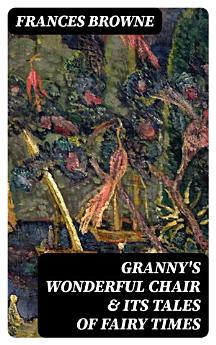
Granny's Wonderful Chair & Its Tales of Fairy Times
Frances Browne
Aug 2022 · DigiCat
Ebook
98
Pages
family_home
Eligible
info
About this ebook
In "Granny's Wonderful Chair & Its Tales of Fairy Times," Frances Browne masterfully weaves a tapestry of enchanting narratives that transport readers into a realm of whimsy and wonder. Published in 1857, the collection introduces a charming array of fairy tales, each accompanied by the titular anthropomorphic chair that serves as a bridge between the mundane and the magical. Browne's lyrical prose is imbued with a captivating simplicity that invites both children and adults to reflect on universal themes of love, kindness, and morality, reflecting the Victorian era's fascination with folklore and the didactic qualities of storytelling. Frances Browne herself was a remarkable figure, an Irish poet and novelist who overcame significant adversity, including blindness at a young age. Her unique perspective and deep empathy for the human condition inform her tales, making them rich with emotional depth and moral lessons. Browne's own experiences often echo in her characters' journeys, establishing a heartfelt connection between author and reader that transcends the limitations of her time. This enchanting collection is highly recommended for those who appreciate classic fairy tales with a twist. "Granny's Wonderful Chair" not only entertains but also imparts wisdom, making it a timeless read that will resonate with readers of all ages, encouraging them to embrace the magic that lies in every corner of life.
In "Granny's Wonderful Chair & Its Tales of Fairy Times," Frances Browne masterfully weaves a tapestry of enchanting narratives that transport readers into a realm of whimsy and wonder. Published in 1857, the collection introduces a charming array of fairy tales, each accompanied by the titular a...
Discover more
About the author
Frances Browne (1816-1879) was an Irish poet and novelist, who is most renowned for her collection of fairy tales entitled 'Granny's Wonderful Chair & Its Tales of Fairy Times' (1856). Born in Stranorlar, County Donegal, Browne was the seventh of twelve children. Despite being blinded by smallpox at the early age of eighteen months, her literary talents became apparent as she developed a remarkable memory and an avid appetite for storytelling, nurtured by her mother's readings. Browne's literary style often weaved the rich tapestry of oral narrative traditions with the Victorian fairy tale genre, which was burgeoning during the 19th century. Her work in 'Granny's Wonderful Chair', admired for its imaginative power and narrative charm, became a staple of children's literature and is celebrated for its timeless tales that capture the spirit of fairy lore. A contemporary of Browne, Charles Dickens, noted her poetic gifts and rich prose, leading to her contributing fiction to Dickens's periodicals. Though her works transcended the mere escape into fantasy, they often provided commentary on the social issues of her time, cloaked in the guise of fable and folklore. Frances Browne's contribution to literary arts endures, her work continuing to enchant readers with its lyrical quality and fantastical elements, hallmarks of her enduring literary legacy.
Frances Browne (1816-1879) was an Irish poet and novelist, who is most renowned for her collection of fairy tales entitled 'Granny's Wonderful Chair & Its Tales of Fairy Times' (1856). Born in Stranorlar, County Donegal, Browne was the seventh of twelve children. Despite being blinded by smallpox...
Rate this ebook
Tell us what you think.
Reading information
Smartphones and tablets
Install the Google Play Books app for Android and iPad/iPhone. It syncs automatically with your account and allows you to read online or offline wherever you are.
Laptops and computers
You can listen to audiobooks purchased on Google Play using your computer's web browser.
eReaders and other devices
To read on e-ink devices like Kobo eReaders, you'll need to download a file and transfer it to your device. Follow the detailed Help Center instructions to transfer the files to supported eReaders.