Tietoa tästä e-kirjasta
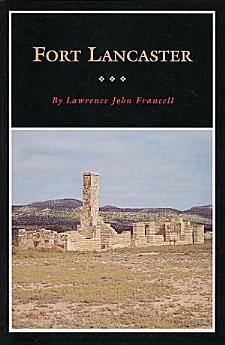
Today Fort Lancaster sits as a ghostly ruin in west Texas, far removed from any major highway. However, this frontier post once played a major role in the protection of the primary southern route to California after the discovery of gold. Built along Live Oak Creek near the junction with the Pecos, Fort Lancaster was established in 1855 as one of a chain of posts along the Military Road from San Antonio to El Paso. Until the establishment of Fort Stockton by troops from Fort Lancaster, this was the only garrison between Fort Clark and Fort Davis.
Manned by only one of two companies of the First Infantry, Fort Lancaster was one of the most isolated posts in Texas. The only civilian presence was a sutler and a stage stop for the overland mail. Maintaining the post, patrolling and protecting the road and occasional contact with Indians made up most of the routine. Official inspections, the arrival of the camel expedition, the passage of the Regiment of Mounted Rifles, and several pitched fights with Apaches added spice to an otherwise predictable existence.
The history of Fort Lancaster is not one of great men or great events. It is the story of the commonplace life of soldiers on the isolated American frontier during a time when communications relied upon horse and wagon, and the road they guarded was the vital link to California. Remote, poorly constructed, and inadequately garrisoned, Fort Lancaster stands as an excellent example of the typical frontier post in the pre-Civil War era.
Today Fort Lancaster is operated by Texas Parks and Wildlife as a State Historic Park. As isolated today as it was when active, the atmospheric ruins of Fort Lancaster are a stark reminder of Army life on the Texas frontier.
Today Fort Lancaster sits as a ghostly ruin in west Texas, far removed from any major highway. However, this frontier post once played a major role in the protection of the primary southern route to California after the discovery of gold. Built along Live Oak Creek near the junction with the Peco...
Tutki lisää
Tietoja kirjoittajasta
LAWRENCE JOHN FRANCELL is a museum services consultant and lives in Fort Davis. He is a volunteer at Fort Davis National Historic Site and is an Adjunct Lecturer in the Museum Studies Department of Baylor University.
LAWRENCE JOHN FRANCELL is a museum services consultant and lives in Fort Davis. He is a volunteer at Fort Davis National Historic Site and is an Adjunct Lecturer in the Museum Studies Department of Baylor University.
Arvioi tämä e-kirja
Kerro meille mielipiteesi.
Tietoa lukemisesta
Älypuhelimet ja tabletit
Asenna Google Play Kirjat ‑sovellus Androidille tai iPadille/iPhonelle. Se synkronoituu automaattisesti tilisi kanssa, jolloin voit lukea online- tai offline-tilassa missä tahansa oletkin.
Kannettavat ja pöytätietokoneet
Voit kuunnella Google Playsta ostettuja äänikirjoja tietokoneesi selaimella.
Lukulaitteet ja muut laitteet
Jos haluat lukea kirjoja sähköisellä lukulaitteella, esim. Kobo-lukulaitteella, sinun täytyy ladata tiedosto ja siirtää se laitteellesi. Siirrä tiedostoja tuettuihin lukulaitteisiin seuraamalla ohjekeskuksen ohjeita.