About this ebook
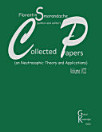
This paper develops fuzzy and neutrosophic extensions of Gödel's incompleteness theorems based on graded and triadic self-reference. Starting from fuzzy and neutrosophic forms of the Liar Paradox — originally formulated by Florentin Smarandache — we construct generalized Gödel sentences through diagonalization in formal systems capable of encoding their own provability. In the fuzzy setting, incompleteness appears as nontrivial intermediate provability degrees: the Gödel sentence stabilizes at a truth degree F ∈ (0,1) rather than collapsing to a binary undecidable. In the Neutrosophic setting, incompleteness appears as an irreducible valuation ⟨T, I, F⟩ with simultaneous nonzero truth, indeterminacy, and falsehood components.
This paper develops fuzzy and neutrosophic extensions of Gödel's incompleteness theorems based on graded and triadic self-reference. Starting from fuzzy and neutrosophic forms of the Liar Paradox — originally formulated by Florentin Smarandache — we construct generalized Gödel sentences through d...
Discover more
Rate this ebook
Tell us what you think.
Reading information
Smartphones and tablets
Install the Google Play Books app for Android and iPad/iPhone. It syncs automatically with your account and allows you to read online or offline wherever you are.
Laptops and computers
You can listen to audiobooks purchased on Google Play using your computer's web browser.
eReaders and other devices
To read on e-ink devices like Kobo eReaders, you'll need to download a file and transfer it to your device. Follow the detailed Help Center instructions to transfer the files to supported eReaders.