About this ebook
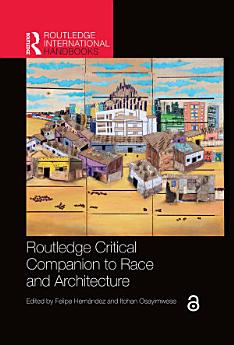
The volume expands the discourse on racializing concepts and categories beyond the traditional Africa–North America axis, examining many issues that have been overlooked in the field of architecture. This broader range of topics provides for a more comprehensive understanding of how race is constructed and represented in architectural theory and practice globally.
Written by an international and influential cast of contributors, the structure of the book permits a detailed revision of the most current theoretical debates on race. Each part deals with a specific challenge at a particular scale. Ultimately, the book embraces discussions about theory, urban and regional debates, architectural design at the scale of the building, history and education, exploring the concept of race in all aspects of the discipline. It is essential reading for anyone studying or working in the built environment.
Discover more
About the author
Felipe Hernández, Ph.D., is a Colombian-born architect who lives and works in the United Kingdom. He serves as an Associate Professor of Architecture and Urban Studies at the University of Cambridge and is a Fellow Architect at King’s College, Cambridge, where he also holds the position of Director of Studies in Architecture. Notably, he was the first Latin American to direct the Centre for Latin American Studies (CLAS) at Cambridge. Currently, he is the Director of the M.Phil. in Architecture and Urban Studies (MAUS). His research explores the intersection between architecture and urbanism under conditions of 'coloniality', seeking relevant approaches to teaching and practicing architecture mainly in the Americas. He has published extensively on postcolonial/decolonial theory, race and Modern Architecture in Latin America.
Itohan Osayimwese is Chair and Associate Professor of the History of Art and Architecture and Urban Studies, and an affiliate faculty member in Africana Studies at the Center for Latin American and Caribbean Studies at Brown University. Her research analyzes how oppressive political ideologies have instrumentalized architecture, design, and material culture in Sub-Saharan Africa, the Anglo-Caribbean, and Central Europe between the eighteenth and twentieth centuries. She is the author of Colonialism and Modern Architecture in Germany (2017), and the editor of German Colonialism in Africa and its Legacies: Architecture, Art, Urbanism, and Visual Culture (2023).