THE GENEALOGY OF MORALS
About this ebook
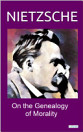
Presented as three essays, the work explores how moral beliefs have evolved through history and how social, religious, and psychological forces have shaped humanity’s understanding of right and wrong. Nietzsche challenges conventional Christian morality and investigates the relationship between power, suffering, resentment, and the creation of ethical systems.
Known for its critical approach and profound philosophical insights, On the Genealogy of Morals remains one of Nietzsche’s most important works. It continues to influence modern philosophy, psychology, cultural studies, and debates about ethics, values, and human nature.
About the author
Friedrich Nietzsche (1844–1900) was a German philosopher, cultural critic, essayist, and philologist whose ideas became among the most influential and debated in modern philosophy. Born in Röcken, Prussia, Nietzsche showed exceptional academic ability and became a professor of classical philology at the University of Basel at a young age before devoting himself fully to writing and philosophical study.
Nietzsche’s works challenged traditional views on morality, religion, truth, culture, and human nature. His major writings include Thus Spoke Zarathustra, Beyond Good and Evil, The Birth of Tragedy, and On the Genealogy of Morals. He introduced influential concepts such as the “will to power,” the critique of conventional morality, and the idea of the Übermensch (Overman).
Through his bold style, psychological insight, and critical examination of values, Nietzsche profoundly influenced philosophy, literature, psychology, and cultural thought. His works continue to inspire discussion and debate on ethics, meaning, individualism, and the nature of human existence.