Informacje o e-booku
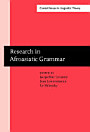
About a century after the year Benjamin Lee Whorf (18971941) was born, his theory complex is still the object of keen interest to linguists. Rencently, scholars have argued that it was not his theory complex itself, but an over-simplified, reduced section taken out of context that has become known as the Sapir-Whorf hypothesis that has met with so much resistance among linguists over the last few decades. Not only did Whorf present his views much more subtly than most people would believe, but he also dealt with a great number of other issues in his work. Taking Whorfs own notion of linguistic relativity as a starting point, this volume explores the relation between language, mind and experience through its historical development, Whorfs own writing, its misinterpretations, various theoretical and methodological issues and a closer look at a few specific issues in his work.
About a century after the year Benjamin Lee Whorf (18971941) was born, his theory complex is still the object of keen interest to linguists. Rencently, scholars have argued that it was not his theory complex itself, but an over-simplified, reduced section taken out of context that has become kno...
Zobacz więcej
Oceń tego e-booka
Podziel się z nami swoją opinią.
Informacje o czytaniu
Smartfony i tablety
Zainstaluj aplikację Książki Google Play na Androida i iPada/iPhone'a. Synchronizuje się ona automatycznie z kontem i pozwala na czytanie w dowolnym miejscu, w trybie online i offline.
Laptopy i komputery
Audiobooków kupionych w Google Play możesz słuchać w przeglądarce internetowej na komputerze.
Czytniki e-booków i inne urządzenia
Aby czytać na e-papierze, na czytnikach takich jak Kobo, musisz pobrać plik i przesłać go na swoje urządzenie. Aby przesłać pliki na obsługiwany czytnik, postępuj zgodnie ze szczegółowymi instrukcjami z Centrum pomocy.