关于此电子书
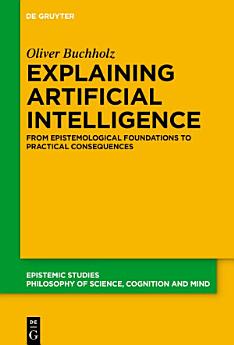
Which kind of artificial intelligence do we want to live with? Should machines explain themselves to us? Machine learning techniques are developing at a rapid pace and find applications not only in banal everyday uses, but also in high-stake situations, including science, medicine, banking, law, and business. But it is impossible to reconstruct how they reach their results and to judge whether they reach their results in the intended way. The mechanism is entirely opaque. This prompts a lot of justified skepticism and criticism of these computer programs. By closely investigating the foundations of opacity and explanations from a philosophy of science and epistemological perspective, Buchholz comes to more optimistic conclusions. This book derives practical consequences from a rigorous conceptual analysis of opacity, paving the way to an effective regulation of machine learning, and will advance the debate about the nature of explanation in the philosophy of science.
Which kind of artificial intelligence do we want to live with? Should machines explain themselves to us? Machine learning techniques are developing at a rapid pace and find applications not only in banal everyday uses, but also in high-stake situations, including science, medicine, banking, law, ...
探索更多
作者简介
Oliver Buchholz, ETH Zurich, Zurich, Switzerland.
Oliver Buchholz, ETH Zurich, Zurich, Switzerland.
为此电子书评分
欢迎向我们提供反馈意见。
如何阅读
智能手机和平板电脑
笔记本电脑和台式机
您可以使用计算机的网络浏览器聆听您在 Google Play 购买的有声读物。
电子阅读器和其他设备
如果要在 Kobo 电子阅读器等电子墨水屏设备上阅读,您需要下载一个文件,并将其传输到相应设备上。若要将文件传输到受支持的电子阅读器上,请按帮助中心内的详细说明操作。