eBook 정보
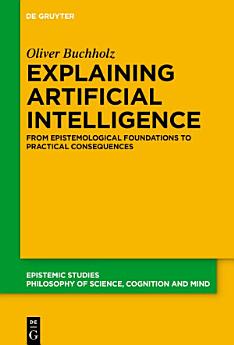
Which kind of artificial intelligence do we want to live with? Should machines explain themselves to us? Machine learning techniques are developing at a rapid pace and find applications not only in banal everyday uses, but also in high-stake situations, including science, medicine, banking, law, and business. But it is impossible to reconstruct how they reach their results and to judge whether they reach their results in the intended way. The mechanism is entirely opaque. This prompts a lot of justified skepticism and criticism of these computer programs. By closely investigating the foundations of opacity and explanations from a philosophy of science and epistemological perspective, Buchholz comes to more optimistic conclusions. This book derives practical consequences from a rigorous conceptual analysis of opacity, paving the way to an effective regulation of machine learning, and will advance the debate about the nature of explanation in the philosophy of science.
Which kind of artificial intelligence do we want to live with? Should machines explain themselves to us? Machine learning techniques are developing at a rapid pace and find applications not only in banal everyday uses, but also in high-stake situations, including science, medicine, banking, law, ...
콘텐츠 둘러보기
저자 정보
Oliver Buchholz, ETH Zurich, Zurich, Switzerland.
Oliver Buchholz, ETH Zurich, Zurich, Switzerland.
이 eBook 평가
의견을 알려주세요.
읽기 정보
스마트폰 및 태블릿
노트북 및 컴퓨터
컴퓨터의 웹브라우저를 사용하여 Google Play에서 구매한 오디오북을 들을 수 있습니다.
eReader 및 기타 기기
Kobo eReader 등의 eBook 리더기에서 읽으려면 파일을 다운로드하여 기기로 전송해야 합니다. 지원되는 eBook 리더기로 파일을 전송하려면 고객센터에서 자세한 안내를 따르세요.