About this ebook
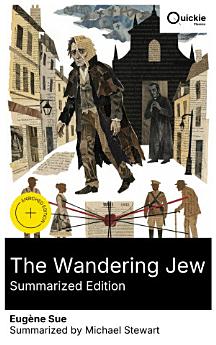
The Wandering Jew (1844–45) fuses the medieval legend with a sprawling feuilleton that follows the dispersed Rennepont heirs while a Jesuit cabal—commanded by the implacable Père Rodin—schemes to seize a vast inheritance due in 1832. Sue stages cliffhangers and revelations across Parisian streets, convent parlors, and far‐flung outposts, blending melodrama, gothic allegory, and a documentary eye for institutions. The legendary Wanderer passes like a moral compass, binding episodes into an anticlerical panorama that indicts the entanglements of capital, charity, and ecclesiastical power. Eugène Sue (1804–1857), son of Napoleon's naval surgeon, shifted from early sea tales to urban panoramas, learning with The Mysteries of Paris how serialization could advance reform. Immersed in 1840s social thought and alarmed by ultramontane influence, he sharpened his humanitarian and anticlerical edge here; his hybrid method—part investigative tableau, part romantic sensationalism—channels political anxiety into narrative momentum. Recommended to readers of Balzac and Dumas, this novel offers irresistible storytelling and a crucial document of nineteenth‐century popular culture. Scholars of the social novel, anticlerical politics, and the history of mass media will find breadth, audacity, and urgent moral debate on every page. Quickie Classics summarizes timeless works with precision, preserving the author's voice and keeping the prose clear, fast, and readable—distilled, never diluted. Enriched Edition extras: Introduction · Synopsis · Historical Context · Brief Analysis · 4 Reflection Q&As · Editorial Footnotes.
The Wandering Jew (1844–45) fuses the medieval legend with a sprawling feuilleton that follows the dispersed Rennepont heirs while a Jesuit cabal—commanded by the implacable Père Rodin—schemes to seize a vast inheritance due in 1832. Sue stages cliffhangers and revelations across Parisian streets...
Discover more
About the author
Eugène Sue (real name Marie-Joseph Sue, 1804-1857) was a French novelist. He was one of several authors who popularized the genre of the serial novel in France. Sue was strongly affected by the socialist ideas of the day, and these prompted his most famous works, The Mysteries of Paris (1842-1843) and The Wandering Jew (1844-1845), which were among the most popular specimens of the serial novel. These works depicted the intrigues of the nobility and the harsh life of the underclass to a wide public.
Eugène Sue (real name Marie-Joseph Sue, 1804-1857) was a French novelist. He was one of several authors who popularized the genre of the serial novel in France. Sue was strongly affected by the socialist ideas of the day, and these prompted his most famous works, The Mysteries of Paris (1842-1843...
Rate this ebook
Tell us what you think.
Reading information
Smartphones and tablets
Install the Google Play Books app for Android and iPad/iPhone. It syncs automatically with your account and allows you to read online or offline wherever you are.
Laptops and computers
You can listen to audiobooks purchased on Google Play using your computer's web browser.
eReaders and other devices
To read on e-ink devices like Kobo eReaders, you'll need to download a file and transfer it to your device. Follow the detailed Help Center instructions to transfer the files to supported eReaders.