About this ebook
“This volume is interesting both because of its global focus, and its chronology up to the present, it covers a good century of changes. It will help define the field of gender studies of humanitarianism, and its relevance for understanding the history of nation-building, and a political history that goes beyond nations.” - Glenda Sluga, Professor of International History and ARC Kathleen Laureate Fellow at the University of Sydney, Australia
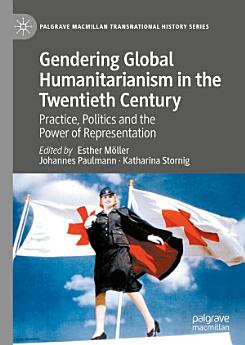
This volume discusses the relationship between gender and humanitarian discourses and practices in the twentieth century. It analyses the ways in which constructions, norms and ideologies of gender both shaped and were shaped in global humanitarian contexts. The individual chapters present issues such as post-genocide relief and rehabilitation, humanitarian careers and subjectivities, medical assistance, community aid, child welfare and child soldiering. They give prominence to thebeneficiaries of aid and their use of humanitarian resources, organizations and structures by investigating the effects of humanitarian activities on gender relations in the respective societies. Approaching humanitarianism as a global phenomenon, the volume considers actors and theoretical positions from the global North and South (from Europe to the Middle East, Sub-Saharan Africa, South and South East Asia as well as North America). It combines state and non-state humanitarian initiatives and scrutinizes their gendered dimension on local, regional, national and global scales. Focusing on the time between the late nineteenth century and the post-Cold War era, the volume concentrates on a period that not only witnessed a major expansion of humanitarian action worldwide but also saw fundamental changes in gender relations and the gradual emergence of gender-sensitive policies in humanitarian organizations in many Western and non-Western settings.
This volume discusses the relationship between gender and humanitarian discourses and practices in the twentieth century. It analyses the ways in which constructions, norms and ideologies of gender both shaped and were shaped in global humanitarian contexts. The individual chapters present issues such as post-genocide relief and rehabilitation, humanitarian careers and subjectivities, medical assistance, community aid, child welfare and child soldiering. They give prominence to thebeneficiaries of aid and their use of humanitarian resources, organizations and structures by investigating the effects of humanitarian activities on gender relations in the respective societies. Approaching humanitarianism as a global phenomenon, the volume considers actors and theoretical positions from the global North and South (from Europe to the Middle East, Sub-Saharan Africa, South and South East Asia as well as North America). It combines state and non-state humanitarian initiatives and scrutinizes their gendered dimension on local, regional, national and global scales. Focusing on the time between the late nineteenth century and the post-Cold War era, the volume concentrates on a period that not only witnessed a major expansion of humanitarian action worldwide but also saw fundamental changes in gender relations and the gradual emergence of gender-sensitive policies in humanitarian organizations in many Western and non-Western settings.
“This volume is interesting both because of its global focus, and its chronology up to the present, it covers a good century of changes. It will help define the field of gender studies of humanitarianism, and its relevance for understanding the history of nation-building, and a political history ...
Discover more
About the author
Esther Moeller is Research Associate at the Liebniz Institute of European History in Mainz, Germany.
Johannes Paulmann is Director of the Leibniz Institute of European History at Mainz, Germany.
Katharina Stornig is Junior Professor of Cultural History at the University of Giessen, Germany.
Johannes Paulmann is Director of the Leibniz Institute of European History at Mainz, Germany.
Katharina Stornig is Junior Professor of Cultural History at the University of Giessen, Germany.
Esther Moeller is Research Associate at the Liebniz Institute of European History in Mainz, Germany.
Johannes Paulmann is Director of the Leibniz Institute of European History at Mainz, Germany.
Katharina Stornig is Junior Professor of Cultural History at the University of Giessen, Germany.
Rate this ebook
Tell us what you think.
Reading information
Smartphones and tablets
Install the Google Play Books app for Android and iPad/iPhone. It syncs automatically with your account and allows you to read online or offline wherever you are.
Laptops and computers
You can listen to audiobooks purchased on Google Play using your computer's web browser.
eReaders and other devices
To read on e-ink devices like Kobo eReaders, you'll need to download a file and transfer it to your device. Follow the detailed Help Center instructions to transfer the files to supported eReaders.