AMS Chelsea Publishing: Collected Papers on Wave Mechanics
Oct 2001 · AMS Chelsea Publishing Issue #302 · American Mathematical Society
Ebook
224
Pages
About this ebook
The famous equation that bears Erwin Schrödinger's name encapsulates his profound contributions to quantum mechanics using wave mechanics. This third, augmented edition of his papers on the topic contains the six original, famous papers in which Schrödinger created and developed the subject of wave mechanics as published in the original edition. As the author points out, at the time each paper was written the results of the later papers were largely unknown to him. This edition also contains three papers that were written shortly after the original edition was published and four lectures delivered by Schrödinger at the Royal Institution in London in 1928. The papers and lectures in this volume were revised by the author and translated into English, and afford the reader a striking and valuable insight into how wave mechanics developed.
The famous equation that bears Erwin Schrödinger's name encapsulates his profound contributions to quantum mechanics using wave mechanics. This third, augmented edition of his papers on the topic contains the six original, famous papers in which Schrödinger created and developed the subject of wa...
Discover more
About the author
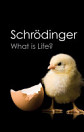
Born and educated in Vienna, Erwin Schrodinger received his Ph.D. in 1910 from the University of Vienna. He developed the theory of wave mechanics (1925--26). For this theory, which furnished a solid mathematical explanation of quantum theory, Schrodinger shared the Nobel Prize in 1933 with Paul Dirac. Schrodinger was dissatisfied with Niels Bohr's early quantum theory of the atom, objecting to the many arbitrary quantum rules imposed. Building on Louis-Victor De Broglie's idea that a moving atomic particle has a wave character, Schrodinger developed a famous wave equation that describes the behavior of an electron orbiting the nucleus of an atom. When applied to the hydrogen atom, the equation yielded all the results of Bohr and De Broglie, and was also used as a tool to solve a wide range of new problems in which quantization occurs. In 1927 Schrodinger succeeded Max Planck at the University of Berlin but resigned in 1933 when the Nazis came to power. He left then for England, becoming a guest professor at Oxford University. In 1936 he returned to Austria, but then fled in 1938 under the threat of Nazi arrest and was invited to Dublin's newly established Institute for Advanced Studies. He remained there from 1940 until his retirement in 1956, when he returned to his native Austria and to the University of Vienna, where he held his last chair in theoretical physics. In 1944 Schrodinger published What Is Life? The Physical Aspects of a Living Cell, a book that had a tremendous impact on a new generation of scientists. The book directed young physicists who were disillusioned by the Hiroshima bombing to an unexplored discipline free of military applications---molecular biology. Schrodinger proposed the existence of a molecular code as the genetic basis of life, inspiring an entire generation to explore this idea.
Born and educated in Vienna, Erwin Schrodinger received his Ph.D. in 1910 from the University of Vienna. He developed the theory of wave mechanics (1925--26). For this theory, which furnished a solid mathematical explanation of quantum theory, Schrodinger shared the Nobel Prize in 1933 with Paul ...
Rate this ebook
Tell us what you think.
Reading information
Smartphones and tablets
Install the Google Play Books app for Android and iPad/iPhone. It syncs automatically with your account and allows you to read online or offline wherever you are.
Laptops and computers
You can listen to audiobooks purchased on Google Play using your computer's web browser.
eReaders and other devices
To read on e-ink devices like Kobo eReaders, you'll need to download a file and transfer it to your device. Follow the detailed Help Center instructions to transfer the files to supported eReaders.