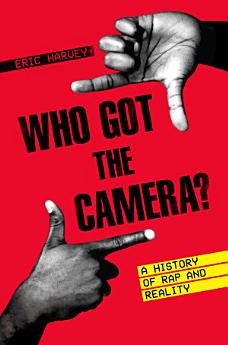
Who Got the Camera?: A History of Rap and Reality

· University of Texas Press
Ebook
408
Pages
Tools

About this ebook

Reality first appeared in the late 1980s—in the sense not of real life but rather of the TV entertainment genre inaugurated by shows such as Cops and America’s Most Wanted; the daytime gabfests of Geraldo, Oprah, and Donahue; and the tabloid news of A Current Affair. In a bracing work of cultural criticism, Eric Harvey argues that reality TV emerged in dialog with another kind of entertainment that served as its foil while borrowing its techniques: gangsta rap. Or, as legendary performers Ice Cube and Ice-T called it, “reality rap.”

Reality rap and reality TV were components of a cultural revolution that redefined popular entertainment as a truth-telling medium. Reality entertainment borrowed journalistic tropes but was undiluted by the caveats and context that journalism demanded. While N.W.A.’s “Fuck tha Police” countered Cops’ vision of Black lives in America, the reality rappers who emerged in that group’s wake, such as Snoop Doggy Dogg and Tupac Shakur, embraced reality’s visceral tabloid sensationalism, using the media's obsession with Black criminality to collapse the distinction between image and truth. Reality TV and reality rap nurtured the world we live in now, where politics and basic facts don’t feel real until they have been translated into mass-mediated entertainment.

Reality first appeared in the late 1980s—in the sense not of real life but rather of the TV entertainment genre inaugurated by shows such as Cops and America’s Most Wanted; the daytime gabfests of Geraldo, Oprah, and Donahue; and the tabloid news of A Current Affair. In a bracing work of cultural...

Discover more

About the author

Eric Harvey is an associate professor in the School of Communications at Grand Valley State University. His writing has appeared in Pitchfork, The New Yorker, Rolling Stone, The Atlantic, The New Republic, The LA Review of Books, Buzzfeed, MTV.com, and The Village Voice.

Eric Harvey is an associate professor in the School of Communications at Grand Valley State University. His writing has appeared in Pitchfork, The New Yorker, Rolling Stone, The Atlantic, The New Republic, The LA Review of Books, Buzzfeed, MTV.com, and The Village Voice.
Rate this ebook

Tell us what you think.

Reading information

Smartphones and tablets
Install the Google Play Books app for Android and iPad/iPhone. It syncs automatically with your account and allows you to read online or offline wherever you are.
Laptops and computers
You can listen to audiobooks purchased on Google Play using your computer's web browser.
eReaders and other devices
To read on e-ink devices like Kobo eReaders, you'll need to download a file and transfer it to your device. Follow the detailed Help Center instructions to transfer the files to supported eReaders.