About this ebook
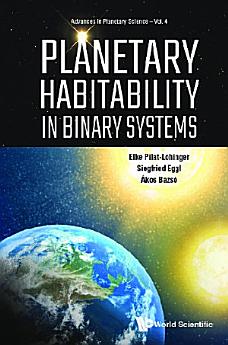
This book addresses these questions. Starting with a brief overview of the various types of double star–planet configurations that have been observed so far, the book discusses the intriguing variety of planetary motion in such environments, taking into account the stellar type, evolution, and activity, and elaborates on how the presence of an additional stellar companion affects planet formation, system architectures and the habitability of planets in binary star systems. New methodologies developed in this area of research are explained and demonstrated for systems such as Alpha-Centauri, HD41004, Kepler-35, and many others. This monograph provides a grand entry to the exciting results that we expect from new missions like TESS, CHEOPS and Plato.