About this ebook
The Peregrinatio also aspired to rouse readers to a new crusade against Islam by depicting a contest in the Mediterranean between the Christian bastion of the city of Venice and the region’s Muslim empires. This crusading rhetoric fit neatly with the state of the printing industry in Mainz, which largely subsisted as a tool for bishops’ consolidation of authority, including selling the pope’s plans to combat the Ottoman Empire.
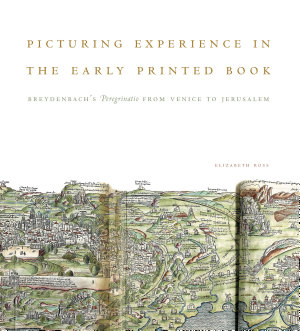
Taking an artist on such an enterprise was unprecedented. Reuwich set a new benchmark for technical achievement with his woodcuts, notably a panorama of Venice that folds out to 1.62 meters in length and a foldout map that stretches from Damascus to Sudan around the first topographically accurate view of Jerusalem. The conception and execution of the Peregrinatio show how and why early printed books constructed new means of visual representation from existing ones—and how the form of a printed book emerged out of the interaction of eyewitness experience and medieval scholarship, real travel and spiritual pilgrimage, curiosity and fixed belief, texts and images.
Discover more
About the author
Elizabeth Ross is Associate Professor of Art History at the University of Florida.