About this ebook
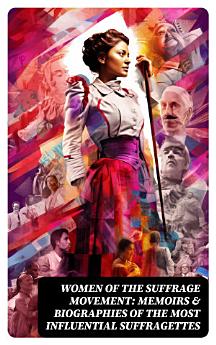
Women of the Suffrage Movement: Memoirs & Biographies of the Most Influential Suffragettes presents an illuminating compilation that captures the fervor and resilience of the women who propelled the suffrage movement into the forefront of societal change. This anthology offers a comprehensive tapestry of literary forms, from personal memoirs to incisive biographies, all woven together by their collective drive for gender equality. The anthology intricately explores the nuanced elements of their battles, punctuated by standout reflections that transcend regional and temporal boundaries. By encapsulating the diverse struggles and victories within the movement, this collection provides readers with a panoramic view of the fight for women's rights. The editors have thoughtfully assembled a diverse group of pioneering voices, including Elizabeth Cady Stanton, Jane Addams, and Emmeline Pankhurst, whose writings collectively convey a profound commentary on the socio-political landscapes of their time. Drawing from distinct cultural and historical backgrounds, these suffragettes emerge not only as advocates but as the architects of social reform. Their collective contributions are emblematic of the broader shifts in philosophical and literary movements that marked the era, enriching this anthology by embedding it within its rightful historical context. This anthology is an invaluable resource for those eager to comprehend the depth and legacy of the suffragette movement. Its compilation of perspectives serves as a potent educational tool, offering readers a rare opportunity to engage with the varied literary styles and insights that defined the fight for equality. Encouraging an immersive exploration of its contents, Women of the Suffrage Movement invites readers to partake in the dialogues that continue to inspire and challenge the ongoing discourse on gender rights.
Women of the Suffrage Movement: Memoirs & Biographies of the Most Influential Suffragettes presents an illuminating compilation that captures the fervor and resilience of the women who propelled the suffrage movement into the forefront of societal change. This anthology offers a comprehensive tap...
Discover more
About the author
Elizabeth Cady Stanton (1815–1902) was a pioneering figure in the early women's rights movement in the United States. A relentless advocate for women's suffrage, Stanton's intellectual acumen and persuasive rhetoric propelled her to the forefront of social reform. With an educational foundation that included informal legal study under her father, Judge Daniel Cady, Stanton developed a keen sense of justice and equality from a young age. She is perhaps best known for her role in organizing the 1848 Seneca Falls Convention, where she delivered the groundbreaking Declaration of Sentiments, demanding equal rights for women, including the right to vote. Stanton's partnership with Susan B. Anthony led to the formation of the National Woman Suffrage Association and the publication of the six-volume 'History of Woman Suffrage.' Her literary contributions, such as co-authoring 'The Woman's Bible' and her own autobiography, 'Eighty Years & More,' profoundly impacted the cultural understanding of women's rights. In 'Women of the Suffrage Movement: Memoirs & Biographies of the Most Influential Suffragettes,' Stanton's profound legacy can be traced through the narratives of those she inspired. Her advocacy transcended abolitionism to address a wider spectrum of women's issues, including parental and custody rights, property rights, and employment and income rights. Stanton's rhetoric and literary style are characterized by her powerful use of moral suasion, assertive stance, and incisive critiques of the patriarchal establishment that have cemented her place as a seminal figure in American history.
Elizabeth Cady Stanton (1815–1902) was a pioneering figure in the early women's rights movement in the United States. A relentless advocate for women's suffrage, Stanton's intellectual acumen and persuasive rhetoric propelled her to the forefront of social reform. With an educational foundation t...
Rate this ebook
Tell us what you think.
Reading information
Smartphones and tablets
Install the Google Play Books app for Android and iPad/iPhone. It syncs automatically with your account and allows you to read online or offline wherever you are.
Laptops and computers
You can listen to audiobooks purchased on Google Play using your computer's web browser.
eReaders and other devices
To read on e-ink devices like Kobo eReaders, you'll need to download a file and transfer it to your device. Follow the detailed Help Center instructions to transfer the files to supported eReaders.