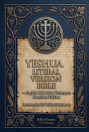
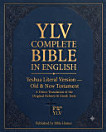
Yeshua Literal Version (YLV) — New Testament: The Real New Testament · English Edition
About this ebook
The Yeshua Literal Version is built on one conviction: the original text is richer than tradition has allowed it to be.
For centuries, traditional translations have quietly flattened Scripture — replacing loaded original words with familiar church vocabulary, smoothing over distinctions the inspired authors deliberately made, and embedding later theology into the text itself. What was lost is not accuracy alone, but depth.
The YLV restores that depth:
Fuller, not flatter. Key original terms are preserved alongside their translation — Torah (not merely "law"), spirit (ruach), soul (nephesh) — so the reader sees both the meaning and the very word the authors chose, and can trace the threads they wove through all of Scripture.
More precise, not paraphrased. Where traditional versions settle for a comfortable approximation, the YLV renders what the text actually says, with the precision the original deserves. Nothing is downgraded, and no later theology is smuggled in.
The Name restored. Yeshua — the name the Messiah was actually called — stands at the center, binding the New Testament directly to the promises of the Hebrew Scriptures.
Tradition tested against the text. Where the two diverge, the YLV follows the text — every time.
This is not Scripture made comfortable. It is Scripture made full — for readers who want more of the original, not less: more of its words, more of its connections, more of its voice.
Read it slowly. Compare it with what you've always heard. The text has more to say than you were told.
Discover more
About the author
Elijah Yun is an independent biblical researcher and translator focused on literal translation from the Byzantine RP2018 Greek New Testament. Working at the intersection of linguistic science and biblical scholarship, he produced the Yeshua Literal Version (YLV) — a translation that preserves the original Greek vocabulary through transliteration with gloss, restoring theological nuances lost in conventional translations. His research includes exhaustive word-group studies of the Koine Greek New Testament.