Dorothy B. Hughes: A Poet Turns to Crime
About this ebook
Beginning with her upbringing in Kansas City, Missouri, Battistella follows the writer’s time studying journalism at the University of Missouri, her subsequent work as a newspaper reporter, the eventual publication of her first book, a volume of poetry, and her prolific output of mystery novels that spanned two decades. Battistella situates her work in the broader context of twentieth-century crime fiction and its connection to various political and social movements, including her life-long concern with racial equality, which culminated in the 1963 publication of her final novel, The Expendable Man, which appeared at the height of the Civil Rights movement and is considered by many to be her best work.
In addition to drawing from Hughes’s own work and its reception by contemporary critics, Battistella examines later critical commentaries, scholarly articles, published interviews, archival material, and interviews with friends and family to tell her life story and literary legacy. More importantly, Battistella provides insights into why Dorothy B. Hughes still matters today, making his new work an important contribution to the history of popular culture and literary history.
Discover more
About the author
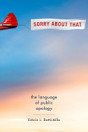
Edwin L. Battistella is an emeritus professor of linguistics and writing at Southern Oregon University in Ashland, Oregon. He is the author of six previous books, including Sorry About That: The Language of Public Apology (Oxford University Press, 2014) and Dangerous Crooked Scoundrels: Insulting the President from Washington to Trump (Oxford University Press, 2020). His essays have appeared in Time Magazine, The Daily Beast, The Conversation, AEON, The Huffington Post, Politico, The Chronicle of Higher Education, Academe, Choice, the Library Journal, and The Smart Set. Battistella was Dean of the School of Arts & Letters at Southern Oregon University from 2000 to 2006 and interim Provost from 2007 to 2008. He is a Fellow of the Linguistic Society of America.