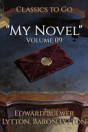
"My Novel": Restored Classics to Go Edition
About this ebook
Discover more
About the author
Edward Bulwer-Lytton, later Baron Lytton, was one of the most prolific and widely read English writers of the nineteenth century, a figure who moved with ease between politics, journalism, drama, poetry, and fiction. Born into a distinguished but troubled family, he was educated at Cambridge and entered public life as well as letters, eventually serving in Parliament and later receiving a peerage. His literary career was remarkably varied and successful: he helped shape the modern popular novel with stories that combined social observation, melodrama, historical sweep, and sharp dialogue, while also earning lasting fame for imaginative and gothic tales, historical fiction, and works of speculative vision. At the heart of his writing are questions of ambition, class, power, reform, and the moral costs of success, along with a fascination for the tensions between appearance and reality. Those concerns still feel alive today, especially in a world preoccupied with status, self-making, and the pressures of social change. Though his reputation has shifted over time, his influence remains significant, both for his role in expanding the reach of the novel and for his ability to entertain while probing the structures of society. Readers who enjoy energetic storytelling, Victorian social worlds, and fiction that mixes wit, suspense, and ambition will find him especially rewarding.