About this ebook
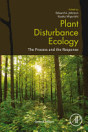
The media coverage of natural disasters (hurricanes, fires, floods, ice storms, etc.) indicates the prevalence of natural disasters in most, if not all, ecosystems. In order for scientists to study, understand, and ultimately predict how these disturbances affect ecosystems, it is necessary for them to know more about the physical processes involved in these disturbances and to learn how to couple these processes to the ecological systems. Essential for all ecologists, forest researchers, and conservation biologists, this book includes chapters on the disturbance processes, how the disturbance causes necrosis or death to individuals, and their effects on population or community processes. In Plant Disturbance Ecology, physical scientists who study disturbances provide an introduction to the physical disturbance processes, while ecologists relate this information to the way the vegetation responds to the disturbances. This reference is also key for all researchers hydrology, geomorphology, and environmental management. - Includes coverage on six different disturbance processes: Wind, Gravity, Geomorphic, Hydrologic, Combustion, and Biotic - Provides a clear explanation of how some of the physical processes of disturbance affect plant ecological processes - Offers ecologists an up-to-date understanding of the physical processes and allows them to predict future affects of disturbances - Unites two related fields by linking the disturbance processes and ecological responses - Presents physical scientists with ideas of how they might usefully apply their knowledge to advance understanding of ecological systems
The media coverage of natural disasters (hurricanes, fires, floods, ice storms, etc.) indicates the prevalence of natural disasters in most, if not all, ecosystems. In order for scientists to study, understand, and ultimately predict how these disturbances affect ecosystems, it is necessary for t...
Discover more
About the author
Edward A. Johnson is a Professor of Biological Sciences Ecology & Evolutionary Biology at the University of Calgary, Canada and up until June 2018, he was also the Director of the Biogeoscience Institute. His research interests are wildfires, avalanches, hillslope and fluvial geomorphic processes, climate, landuse, and other processes as they affect tree populations. He is particularly interested in the explicit coupling of the physical processes to ecological processes. He has over 114 publications and 4,693 total citations.
Kiyoko Miyanishi is a Professor Emeritus at the University of Guelph, having retired in 2005. She has edited 2 books, written 11 book chapters and has over 30 publications and 1,200 citations.
Edward A. Johnson is a Professor of Biological Sciences Ecology & Evolutionary Biology at the University of Calgary, Canada and up until June 2018, he was also the Director of the Biogeoscience Institute. His research interests are wildfires, avalanches, hillslope and fluvial geomorphic processes...
Rate this ebook
Tell us what you think.
Reading information
Smartphones and tablets
Install the Google Play Books app for Android and iPad/iPhone. It syncs automatically with your account and allows you to read online or offline wherever you are.
Laptops and computers
You can listen to audiobooks purchased on Google Play using your computer's web browser.
eReaders and other devices
To read on e-ink devices like Kobo eReaders, you'll need to download a file and transfer it to your device. Follow the detailed Help Center instructions to transfer the files to supported eReaders.