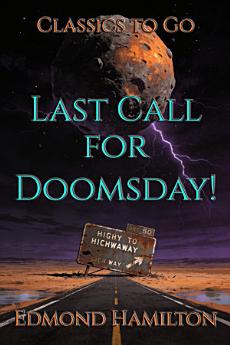
Last Call for Doomsday!: Restored Classics to Go Edition
About this ebook
Discover more
About the author
Edmond Hamilton was one of the great imaginative voices of twentieth-century science fiction, a writer whose career helped shape the genre's sense of cosmic wonder and high-stakes adventure. Born in 1904 in Youngstown, Ohio, he began publishing as a young man and quickly became a staple of the pulp magazines that defined early science fiction, later building a long and influential career across novels, short stories, and comic-book scripts. Hamilton became especially celebrated for sweeping space operas and apocalyptic tales that imagined vast interstellar empires, alien civilizations, heroic quests, and the fragile place of humanity in an uncaring universe. His work often balanced thrilling spectacle with a serious fascination for the limits of power, the lure of exploration, and the recurring fear that civilization itself might be only one catastrophe away from collapse. Those themes still feel remarkably current in an age shaped by technological change, planetary anxiety, and questions about humanity's future among the stars. Hamilton's legacy endures not only because he helped define the scale and energy of classic science fiction, but because he showed how adventure stories could also reflect deep hopes and fears about progress, responsibility, and survival. Readers who love grand, fast-moving science fiction with a sense of awe, danger, and old-school imagination will find him especially rewarding.