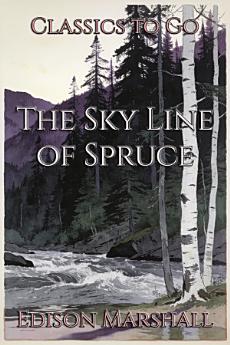
The Sky Line of Spruce: Restored Classics to Go Edition
About this ebook
Discover more
About the author
Edison Marshall was an American novelist and short-story writer whose career flourished in the early and mid-twentieth century, a period when popular fiction was helping to define how readers imagined adventure, wilderness, and human endurance. Born in Indiana and shaped by a lifelong interest in the outdoors, he became known for brisk, accessible storytelling that carried readers into remote landscapes, frontier settings, and moments of physical and moral testing. Over the course of his career he produced a wide range of fiction, earning a reputation for vivid action, sturdy craftsmanship, and an instinct for the kind of dramatic tension that keeps a story moving. His work often centers on courage under pressure, the pull of nature, and the ways ordinary people reveal themselves when confronted by danger or difficult choices, themes that still resonate in an age fascinated by resilience, self-reliance, and the search for meaning in a complicated world. Marshall's place in literary history rests not on experiment or stylistic fashion but on his ability to make popular fiction feel immediate, muscular, and alive, and on his contribution to the tradition of American adventure writing. Today, readers who enjoy fast-moving narratives, rugged settings, and stories of character tested by hardship are especially likely to appreciate him, along with anyone interested in the enduring appeal of classic American escapist fiction.