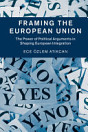
Framing Risky Choices: Brexit and the Dynamics of High-Stakes Referendums
Jun 2020 · McGill-Queen's Press - MQUP
Ebook
244
Pages
family_home
Eligible
info
About this ebook
The majority of policymakers, academics, and members of the general public expected British citizens to vote to remain in the European Union in the 2016 referendum. This perception was based on the well-established idea that voters don't like change or uncertainty. So why did the British public vote to take such a major economic risk? Framing Risky Choices addresses this question by placing the Brexit vote in the bigger picture of EU and Scottish independence referendums. Drawing from extensive interviews and survey data, it asserts that the framing effect – mobilizing voters by encouraging them to think along particular lines – matters, but not every argument is equally effective. Simple, evocative, and emotionally compelling frames that offer negativity are especially effective in changing people's minds. In the Brexit case, the Leave side neutralized the economic risks of Brexit and proposed other risks relating to remaining in the EU, such as losing control of immigration policy and a lack of funding for the National Health Service. These concrete, impassioned arguments struck an immediate and familiar chord with voters. Most intriguingly, the Remain side was silent on these issues, without an emotional case to present. Framing Risky Choices presents a multi-method, comparative, state-of-the-art analysis of how the Brexit campaign contributed to the outcome. Uncovering the core mechanism behind post-truth politics, it shows that the strength of an argument is not its empirical validity but its public appeal.
The majority of policymakers, academics, and members of the general public expected British citizens to vote to remain in the European Union in the 2016 referendum. This perception was based on the well-established idea that voters don't like change or uncertainty. So why did the British public v...
Discover more
About the author
Ece Özlem Atikcan is associate professor in politics and international studies at the University of Warwick. Richard Nadeau is professor of political science at the University of Montreal and co-author of The National Question and Electoral Politics in Quebec and Scotland. Éric Bélanger is professor of political science at McGill University and co-author of The National Question and Electoral Politics in Quebec and Scotland.
Ece Özlem Atikcan is associate professor in politics and international studies at the University of Warwick. Richard Nadeau is professor of political science at the University of Montreal and co-author of The National Question and Electoral Politics in Quebec and Scotland. Éric Bélanger is profes...
Rate this ebook
Tell us what you think.
Reading information
Smartphones and tablets
Install the Google Play Books app for Android and iPad/iPhone. It syncs automatically with your account and allows you to read online or offline wherever you are.
Laptops and computers
You can listen to audiobooks purchased on Google Play using your computer's web browser.
eReaders and other devices
To read on e-ink devices like Kobo eReaders, you'll need to download a file and transfer it to your device. Follow the detailed Help Center instructions to transfer the files to supported eReaders.