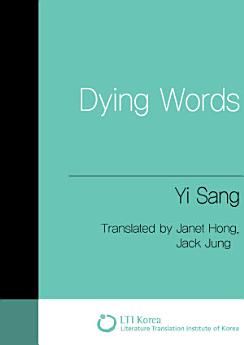
Dying Words

· 20th Century Korean Literature Ibhuku elingu-15 · Literature Translation Institute of Korea
5 izibuyekezo
I-Ebook
46
Amakhasi
Amathuluzi

Mayelana nale ebook

 “Dying Words” (1937) is a confessional story, narrated by a character named Yi Sang. By the narrator’s self-deprecating manner, the reader can tell that this character is a parody of the real Yi Sang. This story is one of three, along with “Wings” and “Child’s Bone,” that takes the relationship between man and woman as its subject. This particular story, which is about a man who loves an unfaithful woman, juxtaposes the past and present to build the narrator’s inner world. As suggested in the title, this work foretells Yi Sang’s own imminent death.
“Dying Words” (1937) is a confessional story, narrated by a character named Yi Sang. By the narrator’s self-deprecating manner, the reader can tell that this character is a parody of the real Yi Sang. This story is one of three, along with “Wings” and “Child’s Bone,” that takes the relationship ...

Thola okuningi

Izilinganiso nezibuyekezo

5 izibuyekezo

Mayelana nomlobi

 Yi Sang (1910-1937) was one of Korea’s most innovative writers of modern literature, enough to deem him Korea’s finest modernist. He died at the early age of 27, but despite his short literary career, he produced surreal and highly experimental pieces that were avant-garde and far ahead of their time. He showed brilliant literary prowess not only in poetry and fiction, but also in essays, exploring the confusion and anxiety of those living under Japanese colonial rule, the psychology and despair of uprooted urban dwellers, and the alienation, disquiet, and terror experienced by intellectuals, more than perhaps any other writer in Korean history. He did not shy away from presenting decadent subject matter, and experimented ceaselessly with form, created self-deprecating characters with excessive self-consciousness, portrayed the delirium of sensation, and employed wit, paradox, montage, and other various techniques all to brilliant, enigmatic effect, to the extent that his works resist easy comprehension even to this day. These are the reasons why he was heralded as a “modern boy,” who sprung onto the literary scene during Korea’s dark colonial period.

Yi Sang’s fiction is largely autobiographical. From his sole novel December 12 all the way to his short story “Dying Words,” Yi Sang has used his own life as material. However through his unique method of processing those experiences, in other words, through his unique artistic method of handling language, his work continues to be cutting-edge even today.

Yi Sang (1910-1937) was one of Korea’s most innovative writers of modern literature, enough to deem him Korea’s finest modernist. He died at the early age of 27, but despite his short literary career, he produced surreal and highly experimental pieces that were avant-garde and far ahead of their...

Nikeza le ebook isilinganiso

Sitshele ukuthi ucabangani.

Ulwazi lokufunda

Amasmathifoni namathebulethi
Faka uhlelo lokusebenza lwe-Google Play Amabhuku lwe-Android ne-iPad/iPhone. Livunyelaniswa ngokuzenzakalela ne-akhawunti yakho liphinde likuvumele ukuthi ufunde uxhunywe ku-inthanethi noma ungaxhunyiwe noma ngabe ukuphi.
Amakhompyutha aphathekayo namakhompyutha
Ungalalela ama-audiobook athengwe ku-Google Play usebenzisa isiphequluli sewebhu sekhompuyutha yakho.
Ama-eReaders namanye amadivayisi
Ukuze ufunde kumadivayisi e-e-ink afana ne-Kobo eReaders, uzodinga ukudawuniloda ifayela futhi ulidlulisele kudivayisi yakho. Landela imiyalelo Yesikhungo Sosizo eningiliziwe ukuze udlulise amafayela kuma-eReader asekelwayo.