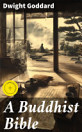
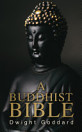
A Buddhist Bible: The Essential Scriptures of the Zen Buddhism
Dwight Goddard
Nov 2023 · DigiCat
Ebook
183
Pages
family_home
Eligible
info
About this ebook
In "A Buddhist Bible," Dwight Goddard curates a seminal anthology that distills the essence of Buddhist thought and practice, rendering it accessible to Western audiences. Compiled in the early 20th century, the text combines suttas from the Pali Canon, Mahayana scriptures, and various Zen teachings, showcasing a diverse landscape of Buddhist philosophy. Goddard's literary style is characterized by clarity and precision, enabling readers to appreciate the profound spiritual insights embedded within these teachings. The work situates itself in the broader context of spiritual exploration during an era when Eastern philosophies began to permeate Western consciousness, reflecting both a quest for enlightenment and a dialogue between cultures. Dwight Goddard was a pivotal figure in American Buddhism and played a vital role in introducing Buddhist concepts to the Western world. His extensive travels in Asia and his affiliations with various Buddhist scholars yielded a rich comprehension of the traditions he sought to bridge with Western ideologies. Goddard's experiences, coupled with his commitment to disseminating Buddhist wisdom, illuminate his intentions in creating this compilation. For those interested in exploring the profound and transformative nature of Buddhist teachings, "A Buddhist Bible" serves as an essential gateway. Whether you are new to Buddhism or are seeking to deepen your understanding, Goddard's anthology is invaluable, offering illumination, wisdom, and solace in the modern spiritual landscape.
In "A Buddhist Bible," Dwight Goddard curates a seminal anthology that distills the essence of Buddhist thought and practice, rendering it accessible to Western audiences. Compiled in the early 20th century, the text combines suttas from the Pali Canon, Mahayana scriptures, and various Zen teachi...
Discover more
About the author
Dwight Goddard (1861–1939) was an early influential figure in the dissemination of Buddhism in the United States. A pioneer in the American Zen Buddhist movement, Goddard's journey to Buddhism was precipitated by an extensive professional career as an engineer, which he eventually abandoned in pursuit of spiritual understanding. His quest led him first to Christian contemplative traditions and ultimately to the study of Buddhism. Goddard became most renowned for compiling and editing 'A Buddhist Bible' (1932), which was one of the first anthologies of Buddhist texts available to a Western audience. His work was seminal in introducing key concepts of Mahayana and Theravada Buddhism to American readers. The anthology contains a diverse range of Buddhist scriptures and documents, carefully selected to capture the essence of Buddhist philosophy and practice. Goddard's editorial approach was unique for its time, combining a scholarly interest in Buddhism with a practical, accessible presentation. He sought to bridge the cultural gap by providing interpretive context for these texts, thus rendering them meaningful to a contemporary readership unfamiliar with Buddhist thought. His work has influenced notable figures such as D.T. Suzuki in spreading Buddhist ideas in the West. Goddard's contributions to the popularization of Buddhism in America are commemorated by his legacy as a critical intermediary who opened the doors to cross-cultural spiritual explorations.
Dwight Goddard (1861–1939) was an early influential figure in the dissemination of Buddhism in the United States. A pioneer in the American Zen Buddhist movement, Goddard's journey to Buddhism was precipitated by an extensive professional career as an engineer, which he eventually abandoned in pu...
Rate this ebook
Tell us what you think.
Reading information
Smartphones and tablets
Install the Google Play Books app for Android and iPad/iPhone. It syncs automatically with your account and allows you to read online or offline wherever you are.
Laptops and computers
You can listen to audiobooks purchased on Google Play using your computer's web browser.
eReaders and other devices
To read on e-ink devices like Kobo eReaders, you'll need to download a file and transfer it to your device. Follow the detailed Help Center instructions to transfer the files to supported eReaders.