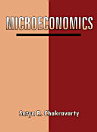
Microeconomics (Thoroughly Revised & Enlarged Edition, 2026)
About this ebook
In the process of preparing the new edition, a fresh look has been taken at all the existing chapters to make sure that they provide clear coverage of the topics. Addition and alterations in several chapters have been made to keep the coverage contemporary.
To maintain consistency with the increased demand of newly emerging issues of economics, three new chapters, namely ‘Environmental Economics’ (Chapter 27), ‘Behavioral Economics’ (Chapter 28) and ‘Financial Economics’ (Chapter 29), have been incorporated into the revised edition. The book’s wide coverage of the topics, combined with their analytical, geometric and clear exposition make the book highly comprehensive and suitable as a class material for undergraduate and graduate students in economics and business. It will as well be a quite satisfactory reference manual for researchers in many areas.
Discover more
About the author
Dr. Satya R. Chakravarty is a retired Professor of the Indian Statistical Institute, Kolkata, India. He received his Ph.D., Masters, and Bachelor of Statistics (Hons.) at the Indian Statistical Institute in Kolkata.
He has published articles in several of the most prestigious and high-impact journals in Economics on Inequality, Poverty, Polarization, Direct Taxation, Cooperative Game Theory and Industrial Organization. Authored a number of books brought out by reputed publishers like the Cambridge University Press, John Wiley and Springer. Serves on the Editorial Boards of Social Choice and Welfare and Journal of Economic Inequality. Also acted as an advisor to the World Bank and Asian Development Bank.
Held visiting positions at various well-known universities around the globe, including The University of British Columbia, Canada; The University of Karlsruhe, Germany; The Bar-llan University, Israel; The Kagawa University, Japan; The Paris School of Economics, France; The Chinese University of Hong Kong, Hong Kong; The Bocconi University, Italy; The Yokohama National University, Japan and The University of International Business and Economics, China.
Dr. Chakravarty was also awarded the Mahalanobis Memorial Prize by the Indian Econometric Society in 1994.