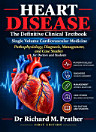
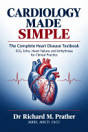
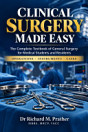
Cardiovascular Medicine Made Clinical: The Only Single-Volume Heart Disease Textbook You Need — Evidence-Based Diagnosis and Treatment for Everyday Practice
About this ebook
Cardiovascular disease remains the leading cause of death worldwide, accounting for nearly a quarter of all deaths in the United Kingdom and similar proportions across Europe, North America, and increasingly in low- and middle-income countries. Every year brings new clinical trials, updated guidelines, novel pharmacological therapies, and advances in interventional cardiology and cardiac imaging. Keeping pace with this relentless flow of information is difficult for cardiologists; for general practitioners, internal medicine physicians, emergency department clinicians, and trainees, it can feel overwhelming. This book is designed to solve that problem.
Unlike traditional cardiology textbooks that overwhelm the reader with tables, bullet points, and disconnected facts, Cardiovascular Medicine Made Clinical uses clear, flowing prose to explain the reasoning behind every diagnostic decision and therapeutic recommendation. There are no tables in this book. That is a deliberate choice. Tables encourage superficial pattern recognition, whereas prose forces the reader to understand the underlying pathophysiology, the evidence base, and the clinical context. When you finish a chapter, you will not just know what to do — you will understand why you are doing it.
The book is organised into five comprehensive parts, each building on the last to create a coherent narrative of cardiovascular medicine. Part One: Foundations of Cardiovascular Medicine covers the essential clinical skills that every clinician needs. It begins with the cardiovascular history and physical examination, explaining how to elicit diagnostic information through careful questioning and systematic examination. It then covers electrocardiography for the clinician, providing a practical, systematic approach to interpreting every tracing with confidence. Subsequent chapters address echocardiography and cardiac imaging, cardiac biomarkers and laboratory testing, and cardiovascular risk assessment and prevention. These are the tools that underpin every cardiology consultation, regardless of specialty.
Part Two: Coronary Artery Disease addresses the most common form of heart disease in clinical practice. It begins with stable angina and chronic coronary syndromes, explaining the pathophysiology of atherosclerosis, the ischaemic cascade, and the evidence supporting medical therapy, revascularisation, and lifestyle modification. It then covers acute coronary syndromes in detail, including STEMI and NSTEMI, with a focus on time-critical diagnosis and treatment. Further chapters address percutaneous coronary intervention and surgical revascularisation, secondary prevention after myocardial infarction, and the increasingly recognised conditions of microvascular angina and coronary vasospasm. These chapters provide the practical guidance needed to manage patients from initial presentation through long-term follow-up.
Part Three: Heart Failure and Cardiomyopathies tackles the growing burden of heart failure, which affects millions of people worldwide and is becoming more common as populations age. It begins with heart failure with reduced ejection fraction, explaining the four pillars of modern therapy: renin-angiotensin system inhibition, beta-blockade, mineralocorticoid receptor antagonism, and sodium-glucose cotransporter-2 inhibition. It then covers heart failure with preserved ejection fraction, a condition that was long neglected but is now recognised as equally important and increasingly treatable. Subsequent chapters address dilated, hypertrophic, and restrictive cardiomyopathies, myocarditis and inflammatory heart disease, and cardiac rehabilitation and palliative care in heart failure. These chapters provide a comprehensive framework for managing this complex and progressive condition.
Part Four: Arrhythmias and Conduction Disease covers the electrical disorders of the heart, which affect millions of people and cause significant morbidity and mortality. It begins with atrial fibrillation and atrial flutter, explaining the pathophysiology, the importance of stroke prevention, the role of rate and rhythm control, and the growing role of catheter ablation. It then covers supraventricular tachycardias, ventricular arrhythmias and sudden cardiac death, bradyarrhythmias and conduction blocks, and pacemakers, implantable cardioverter-defibrillators, and cardiac resynchronisation therapy. These chapters provide the knowledge needed to diagnose and manage the full spectrum of cardiac rhythm disorders.
Part Five: Valvular, Pericardial, and Vascular Disease addresses the structural and vascular conditions that frequently accompany coronary artery disease and heart failure. It begins with aortic stenosis and regurgitation, explaining the pathophysiology, the role of echocardiography, and the indications for surgical and transcatheter intervention. It then covers mitral and tricuspid valve disease, infective endocarditis and prosthetic valve management, pericardial diseases, and aortic diseases and peripheral arterial disease. These chapters complete the picture of cardiovascular medicine, providing the knowledge needed to manage the full range of conditions that affect the heart and circulation.
Every chapter in this book follows a consistent structure. It begins with the clinical problem, explaining why it matters and how it presents in practice. It then explains the pathophysiology in clear, accessible language, so the reader understands the underlying mechanisms. It reviews the evidence base for diagnostic and therapeutic options, citing landmark clinical trials and current guidelines. It provides practical guidance on management, including medication dosing, procedural indications, and follow-up strategies. And it ends with key points that summarise the most important takeaway messages.
Throughout the book, Dr Prather writes in a conversational, human tone, as if he is speaking directly to the reader. He avoids jargon and AI-sounding language, explaining concepts with realistic clinical examples rather than promotional language. He draws on decades of experience at the bedside, in clinics, and in the cardiac catheterisation laboratory. He knows what it is like to make decisions under pressure, to counsel anxious patients, and to navigate the uncertainties that are inherent in clinical medicine. That experience is evident on every page.
This book is written in UK English and is suitable for a global audience. It is designed for consultant cardiologists, cardiology trainees, general practitioners, internal medicine physicians, emergency medicine clinicians, specialist nurses, physician associates, and medical students. It is also suitable for anyone preparing for cardiology board examinations, including the MRCP, the European Society of Cardiology certification, and the American Board of Internal Medicine cardiology examination. The content is aligned with the latest guidelines from the European Society of Cardiology, the American Heart Association, the American College of Cardiology, and the National Institute for Health and Care Excellence.
The book is formatted for Amazon's 6x9 inch paperback size and is also available as an eBook. The table of contents is clickable, allowing readers to navigate quickly to the chapter they need. The headings are coloured and bolded for easy reference, and the body text is set at 14-point font for comfortable reading. The book is free from unnecessary bold formatting, artificial punch lines, and promotional language. It is written to be read sequentially, as a coherent narrative, but it is also designed to be consulted in the middle of a clinic when a quick answer is needed.
Cardiovascular Medicine Made Clinical is more than a textbook. It is a practical companion for every clinician who cares for patients with heart disease. It is evidence-based, but it is also readable. It is comprehensive, but it is also concise. It is written by an experienced clinician who understands the realities of everyday practice, and who knows that the best medicine is delivered by clinicians who think critically, communicate clearly, and care deeply about their patients.
Whether you are a seasoned cardiologist looking for a refresher, a trainee preparing for examinations, a general practitioner managing patients with complex cardiovascular conditions, or an emergency physician faced with a time-critical decision, this book will give you the knowledge, the confidence, and the practical guidance you need. It is the only single-volume heart disease textbook you will ever need.
What makes this book different:
No tables. Complex clinical reasoning is explained in clear prose, not reduced to grids of checkmarks.
Evidence-based. Every recommendation is grounded in landmark clinical trials and current guidelines.
Clinically focused. Practical guidance that can be applied immediately in the clinic, the ward, or the emergency department.
Comprehensive. Covers the full spectrum of cardiovascular medicine, from prevention to advanced heart failure.
Readable. Written in UK English with a conversational, human tone that makes complex concepts accessible.
Single volume. Everything you need in one book, without the need to cross-reference multiple textbooks.
Who This Book Is For
Consultant cardiologists and cardiology trainees
General practitioners and family physicians
Internal medicine physicians and hospitalists
Emergency medicine clinicians
Cardiology specialist nurses and physician associates
Medical students and foundation doctors
Candidates preparing for MRCP, ESC, or ABIM cardiology examinations
Anyone seeking a comprehensive, readable, evidence-based guide to heart disease
Key Topics Covered
Cardiovascular history and examination Electrocardiography Echocardiography Cardiac imaging Cardiac biomarkers Cardiovascular risk assessment Stable angina Acute coronary syndromes STEMI NSTEMI Percutaneous coronary intervention Coronary artery bypass grafting Secondary prevention Microvascular angina Coronary vasospasm Heart failure with reduced ejection fraction Heart failure with preserved ejection fraction Dilated cardiomyopathy Hypertrophic cardiomyopathy Restrictive cardiomyopathy Myocarditis Cardiac sarcoidosis Cardiac rehabilitation Palliative care Atrial fibrillation Atrial flutter Supraventricular tachycardia Ventricular arrhythmias Sudden cardiac death Bradyarrhythmias Conduction blocks Pacemakers ICDs Cardiac resynchronisation therapy Aortic stenosis Aortic regurgitation Mitral regurgitation Mitral stenosis Tricuspid regurgitation Infective endocarditis Pericardial diseases Aortic dissection Aortic aneurysm Peripheral arterial disease
Discover more
About the author
Dr Richard M. Prather is a consultant cardiologist with more than two decades of experience in clinical practice, research, and medical education. He trained in medicine at the University of Edinburgh and completed his cardiology training at the Royal Brompton Hospital and the John Radcliffe Hospital in Oxford. He holds fellowships from the Royal College of Physicians and the American College of Cardiology, and he has published extensively on heart failure, valvular heart disease, and preventive cardiology.
His clinical work spans the full spectrum of cardiovascular medicine, from general cardiology clinics and coronary care units to specialist heart failure and valve clinics. He has served as clinical lead for cardiac rehabilitation and has been instrumental in developing integrated care pathways for patients with chronic heart disease. His research interests include the early detection of cardiomyopathy, the optimisation of medical therapy in heart failure, and the use of cardiac imaging to guide clinical decision-making.
Dr Prather is known for his ability to explain complex medical concepts in plain language, and he has taught generations of medical students, junior doctors, and general practitioners. He believes that good cardiovascular care depends less on expensive technology and more on careful clinical assessment, clear thinking, and genuine communication with patients. This book reflects that belief. It is written for the busy clinician who needs practical, evidence-based guidance that can be applied immediately at the bedside, in the clinic, or in the emergency department.
Outside of medicine, he is a keen long-distance runner and an amateur pianist. He lives in London with his wife and two children.