关于此电子书
The book has the following unique features:
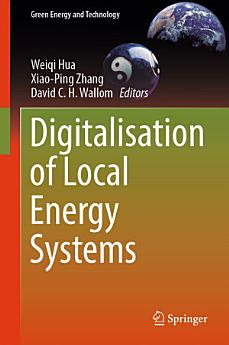
1. Comprehensive coverage: This book offers a comprehensive guide to the digitalisation of local energy systems, covering a range of topics from smart grids and renewable energy integration to demand-side management and cybersecurity.
2. Cutting-edge research: The book includes cutting-edge research and real-world case studies from leading experts in the field, providing readers with valuable insights into the latest developments and trends.
3. Interdisciplinary approach: The book takes an interdisciplinary approach to the digitalisation of local energy systems, drawing on expertise from engineering, data science, policy, and regulation.
4. Net zero focus: The book is particularly relevant for professionals working on the transition to net
zero and the decarbonisation of local energy systems, providing practical strategies for enhancing efficiency, resilience, and sustainability.
5. Global perspective: The book features contributions from authors based in the UK, USA, China, Ireland, Sweden, and Singapore, providing a global perspective on the digitalisation of local energy systems and its implications for the energy sector worldwide.
探索更多
作者简介
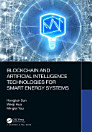
Dr Weiqi Hua is an Assistant Professor in Energy Systems at the University of Birmingham since 2023. He took postdoctoral positions at the University of Oxford and Cardiff University and received his Ph.D. degree from the University of Durham in 2021. Dr Hua is the founder of Energy Digits, and recognised as the Forbes 100 Most Influential Chinese in 2023. His research interests include: i) multi-energy system modelling and optimisation, ii) digitalisation, digital twin, and machine learning for energy system analytics, and iii) energy policy, economics, and local energy markets, which has been funded by EPSRC, the Royal Society, British Academy, UK Government, Horizon 2020, and UK Network Innovation Allowance. Dr Hua is an Editorial Board Member of Applied Energy, IET Smart Grid, and Oxford Open Energy. He has edited the book ‘Blockchain and Artificial Intelligence Technologies for Smart Energy Systems’ (with Chapman and Hall/CRC). His research has contributed to the written evidence of UK Parliament on heat decarbonisation (DHH0053), Unlocking Community Energy at Scale (COM0049), and Ofgem policy consultation on Regional Energy Strategic Plan (RESP).
Professor Xiao-Ping Zhang is a Professor of Electrical Power Systems and Co-Director of the Birmingham Energy Institute at the University of Birmingham, UK. His research focuses on HVDC, FACTS, renewable energy, energy systems market operations, power system planning, energy quality, energy union, and Global Electricity Grid. He co-authored Flexible AC Transmission Systems: Modeling and Control (Springer, 2006 & 2012) and Restructured Electric Power Systems: Analysis of Electricity Markets with Equilibrium Models (IEEE Press/Wiley, 2010). He is a Distinguished Lecturer for the IEEE Power & Energy Society, Prof. Zhang is a Fellow of IEEE and IET. From 2020 to 2023, he served on the Expert Advisory Group for the UK Government’s Offshore Transmission Network Review, contributing to national energy strategies.
Professor David Wallom is a Professor in Informatics and Associate Director – Innovation of the Oxford e-Research Centre, where he leads two separate research groups, Energy and Environmental ICT, and Advanced e-infrastructure & Cloud Computing. He has led over 55 research projects in areas such as Cloud utilisation, Cybersecurity, Smart Energy Grids, Research Data Management, Green IT, ICT Security and Institutional Repositories. He is a member of the GCHQ recognized Academic Centre of Excellence in Cyber Security and the UK Space Agency Ground segment Advisory Group. David is the academic Board Member of the HEFCE Institute for Environmental Analytics, Chair of the Scientific Advisory Board for the Norweigan Information for Action e-Science Centre and a member of the SAB for the NEGI Tools for Investigating Climate Change at High Northern Latitudes (eSTICC) & Ensemble-based Methods for Environmental Monitoring and Prediction (EmblA) centres. He is also Co-Editor in Chief of the Elsevier journal SoftwareX.