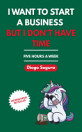
The Skill You Can Rent: I Want to Start a Business but I'm Not an Entrepreneur
About this ebook
For most people holding this book, it feels like borrowing somebody else's coat, cut for a person with a louder laugh and a fuller bank account.
You think an entrepreneur is a kind of person you'd have to turn into before you could start. It runs the other way round: people turn into that kind of person after strangers start paying them.
Chapter 1 hands you a sheet of paper: the word "entrepreneur" and the first five words you associate with it, each marked yes or no. The chapters after it take those words one at a time, look at what the research found, give the other side a fair hearing, and end with a small piece of evidence to collect.
Inside:
The person you picture: entrepreneurs and managers overlap almost completely in personality, and in the United States only about one business in five has any employeesThe risk you think they love: in one large American sample, the people starting businesses were more risk-averse than the people who were notYou don't have to be the loud one: among 340 people selling by phone in a call centre, the very outgoing sold less than the people in the middleThe energy they don't have either: founders burn out too, and what drains people is heavy demands with little say over how to meet themThe skill you can rent: one real quote for the skill you are sure you lackThe money some of them had: children from the top 1% became inventors ten times as often as children below the median, yet outside the richest 5% of households, more wealth barely went with more startingBorn that way? A heritability of about 40 percent in British twins, and what that number does not say about youThe wrong measuring stick: venture-backed founders received $5.8 million on average when they exited, while almost three-quarters received nothingThe last person who has to say yes: moderate confidence, not the highest, went with the best chance of owning a businessThe identity comes after: in Togo, training owners to take initiative raised profits by about 30 percent, against about 11 percent for traditional trainingThe stranger who pays: why it has to be a stranger, and why an introduction helpsAlmost every study names its researchers and its year, and when they disagree, both sides are on the page. The book concedes what is real: some differences, money, and a share passed down in families.
Diego Segura is an industrial engineer who has spent his career working out how systems fail and how to fix them. He holds an MBA and a master's in Digital Technology from Boston University, and has worked with Stanford, Harvard, MIT and Boston University. He has founded companies in more than one country, and not all of them ended well. He is also autistic, and decided as a teenager that he could never be like the founders he pictured. Everything he has built since, he built as somebody who had already ruled himself out.
The book ends with one request: before ninety days have passed, ask a stranger who owes you nothing to pay a price you name for one small, specific thing, and write their answer on your page.
No exercise asks you to quit a job, borrow money or spend your savings. And if you decide, on evidence, that you don't want to run a business after all, that is a real answer, and a far better one than a feeling nobody has ever tested.
Discover more
Ratings and reviews
About the author
Diego Segura is an industrial engineer who has spent his career working out how systems fail and how to fix them. He holds an MBA and a master's in Digital Technology from Boston University, and has worked with Stanford, Harvard, MIT and Boston University. He writes by reading everything published on a subject, then reporting what it actually says, including the parts nobody wants to hear.