About this ebook
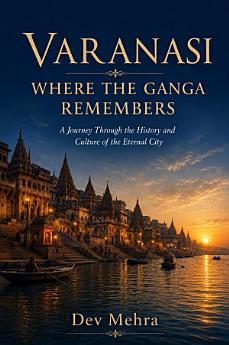
important religious and cultural centres. It explores the city through its ancient
settlements, sacred traditions, riverfront, temples, educational institutions, music,
literature, crafts, festivals, food, architecture, and everyday life.
Varanasi is a place where history and faith are closely connected. Some of its most
important stories come from religious traditions, while others are supported by
archaeology, inscriptions, historical documents, and modern research. This book presents
both with care, distinguishing between what historical evidence establishes and what
communities believe and preserve through tradition.
The purpose is not to reduce Varanasi to a collection of monuments or to describe it only as
a holy city. It is to understand how a city becomes a civilization: through landscape and
memory, work and worship, scholarship and art, families and communities, and the
continuous passage of generations.
Ratings and reviews

- Flag inappropriate
About the author
Dev Mehra is an emerging author whose work explores India’s history, culture, and spiritual heritage. His writing focuses on the enduring relationship between places, traditions, and the people who keep them alive.
In Varanasi: Where the Ganga Remembers, he presents Varanasi through its sacred geography, architecture, festivals, and living communities, inviting readers to discover the city beyond its familiar images.