Acerca deste livro eletrónico
Demilitarizing the Future draws from art, anthropology, and activism to investigate the entrenchment of militarism in everyday lives and consider novel imaginaries of its dissolution—of peacemaking, community, and shared equitable futures. The pieces collected in this anthology track across the Korean DMZ, fortified homes of high-crime Jamaica, the tenements of Palestine, police drones in the skies over U.S. cities, and other sites in the global networks of warfare and military preparedness. The authors represent various fields from anthropology, poetry, literary studies, and community organizing to together present a multidisciplinary collection of creative scholarship. In addition to typical chapters with empirically backed arguments, we include one anthropologist-poet contributor, Nomi Stone, and one photographer, Boone Nguyen, who both showcase the interdisciplinary experiments of our humanistic social science about militarized landscapes. Rather than presuming that the aftermath of war requires the reimposition of new military infrastructures, we have collected a variety of pieces that speak to the socially and artistically generative potentialities of military waste infrastructures as well as their enduring toxicities. Militarism and preparedness for war undergirds the infrastructure and design of everyday lives across the globe and its satellites, but the processes of demilitarization offer their own forms and affordances. Within this collection, we do not insist on a dichotomy between militarism and demilitarization, but rather invite our authors and artists to depict these forces as a categorical range with interdependent imaginaries.
Acerca do autor
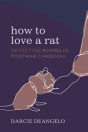
Darcie DeAngelo is an Assistant Professor of Anthropology at the University of Alberta in Canada. As an environmental and medical anthropologist trained in visual methods, her work engages with human–nonhuman relations such as the love between landmine detection rats and their handlers, the excitement of dogs and humans as they hunt for rats in cities, and the kinship of humans and their sourdough starters.
Rebecca Kastleman is Assistant Professor of English and Comparative Literature at Columbia University. Her research focuses on modern drama, theater, and performance and its intersections with social thought.
Joshua O Reno is Professor of Anthropology at Binghamton University. He is the author of several books on subjects ranging from waste management, the military industrial complex, and White supremacy in the United States, to disability and non-verbal communication.
Leah Zani is a public anthropologist based in Oakland, California. She is the author of several books and articles that investigate the social impact of explosives.