About this ebook
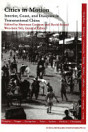
In the 1920s, revolution, war, and imperialist aggression brought chaos to China. Many of the dramatic events associated with this upheaval took place in or near China's cities. Bound together by rail, telegraph, and a shared urban mentality, cities like Guangzhou, Shanghai, and Beijing formed an arena in which the great issues of the day--the quest for social and civil peace, the defense of popular and national sovereignty, and the search for a distinctively modern Chinese society--were debated and fought over. People were drawn into this conflicts because they knew that the passage of armies, the marching of protesters, the pontificating of intellectual, and the opening and closing of factories could change their lives. David Strand offers a penetrating view of the old walled capital of Beijing during these years by examining how the residents coped with the changes wrought by itinerant soldiers and politicians and by the accelerating movement of ideas, capital, and technology. By looking at the political experiences of ordinary citizens, including rickshaw pullers, policemen, trade unionists, and Buddhist monks, Strand provides fascinating insights into how deeply these forces were felt. The resulting portrait of early twentieth-century Chinese urban society stresses the growing political sophistication of ordinary people educated by mass movements, group politics, and participation in a shared, urban culture that mixed opera and demonstrations, newspaper reading and teahouse socializing. Surprisingly, in the course of absorbing new ways of living, working, and doing politics, much of the old society was preserved--everything seemed to change and yet little of value was discarded. Through tumultuous times, Beijing rose from a base of local and popular politics to form a bridge linking a traditional world of guilds and gentry elites with the contemporary world of corporatism and cadres.
In the 1920s, revolution, war, and imperialist aggression brought chaos to China. Many of the dramatic events associated with this upheaval took place in or near China's cities. Bound together by rail, telegraph, and a shared urban mentality, cities like
In the 1920s, revolution, war, and imperialist aggression brought chaos to China. Many of the dramatic events associated with this upheaval took place in or near China's cities. Bound together by rail, telegraph, and a shared urban mentality, cities like
In the 1920s, revolution, war, and imperialist aggression brought chaos to China. Many of the dramatic events associated with this upheaval took place in or near China's cities. Bound together by rail, telegraph, and a shared urban mentality, cities like Guangzhou, Shanghai, and Beijing formed an...
Discover more
About the author
David Strand is Associate Professor of Political Science at Dickinson College.
David Strand is Associate Professor of Political Science at Dickinson College.
Rate this ebook
Tell us what you think.
Reading information
Smartphones and tablets
Install the Google Play Books app for Android and iPad/iPhone. It syncs automatically with your account and allows you to read online or offline wherever you are.
Laptops and computers
You can listen to audiobooks purchased on Google Play using your computer's web browser.
eReaders and other devices
To read on e-ink devices like Kobo eReaders, you'll need to download a file and transfer it to your device. Follow the detailed Help Center instructions to transfer the files to supported eReaders.