About this ebook
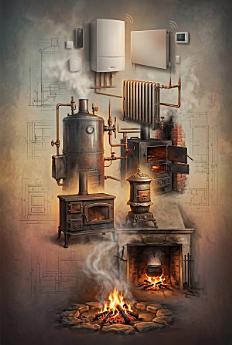
Readers will discover the ingenuity of early societies: the Roman hypocaust that warmed entire bath complexes without smoke, the Asian kang and ondol systems that turned floors and platforms into radiant heat sources, and the medieval chimney that transformed smoky halls into cleaner, more private spaces. Each chapter shows how these solutions were shaped by local climate, available materials, and cultural practices, offering a vivid picture of life before modern convenience.
The narrative then moves into the era of mass‑produced cast iron stoves, the dominance of coal during the Industrial Revolution, and the gradual arrival of gas and early electric heaters. It explains how hot water and steam gave birth to true central heating, how warm air furnaces evolved into the forced‑air systems of the postwar suburbs, and how inventions like the thermostat began to automate comfort while raising questions about efficiency and control.
In the modern sections, the book explores the sophistication of radiant panel heating, the science of heat pumps that move rather than create heat, the community‑scale promise of district heating, and the rise of smart thermostats that learn our habits and connect to broader home automation. It also surveys sustainable pathways—geothermal loops, biomass boilers, advanced solar thermal collectors, and emerging technologies such as vacuum‑insulated windows and green hydrogen—showing how the quest for warmth is now intertwined with the urgent need for decarbonization.
By the end, readers will have gained a deep appreciation of how heating technology has influenced architecture, public health, social structures, and economic development across millennia. They will see past innovations not as isolated gadgets but as part of a continuing story of adaptation, and they will finish with a clear view of the challenges and opportunities that lie ahead as we strive to keep our homes warm without warming the planet.