What Happened to Liberal Democracy?: Remaking a Politics of Shared Prosperity
Aug 2026 · Sold by Penguin
star
3 reviews
Ebook
416
Pages
Tools
info
family_home
Eligible
info
About this ebook
International Bestseller
From Daron Acemoglu, 2024 Nobel laureate in economics and coauthor of Why Nations Fail, an ambitious and expansive inquiry into the biggest story in global politics over the last hundred years: the rise and fall of liberal democracy.
"A very important work and a must-read." —Thomas Piketty, #1 New York Times bestselling author of Capital in the Twenty-First Century
"Daron Acemoglu is one of the most brilliant and insightful thinkers I’ve ever known. This book is a tour de force that left me feeling more optimistic about the future than I have in a long time." —Steven Levitt, #1 New York Times bestselling author of Freakonomics
The dissolution of the Soviet Union in 1991 raised hopes that we were one step closer to the triumph of liberalism. Soon, many predicted, we would all be living in functional liberal democracies. Sustained economic growth would benefit all segments of society and war would be a relic of the past. A generation later, one can only ask: What happened?
Nobel laureate Daron Acemoglu argues in this powerful book that liberal democracy flourished when it pursued its core promises of shared prosperity, democratic governance, and the free pursuit of knowledge. But liberalism, a philosophy built to challenge power, never fully adjusted to becoming the establishment. Nor was it able to deal with the economic and social disruptions that digital technologies wrought. Worse, in the postindustrial economy, liberalism turned its back on its core promises. As a segment of college-educated elites became politically dominant and separated from the rest of society, they sowed the seeds of widespread inequality while intensifying efforts to reshape mass culture and values.
Acemoglu, using the interdisciplinary lens that has won him acclaim, documents the extraordinary, unparalleled progress that liberalism created, and recounts how liberal democratic institutions plunged themselves into crisis over the last several decades. Looking at rapid advances in technology, shifts in regulatory environments, global political history, and economics, Acemoglu lucidly lays out the successes and failures of our most important political system. And he envisions a new way forward, which he calls working-class liberalism: a philosophy that prioritizes shared prosperity, empowers communities, and accommodates a range of values and views.
International Bestseller
From Daron Acemoglu, 2024 Nobel laureate in economics and coauthor of Why Nations Fail, an ambitious and expansive inquiry into the biggest story in global politics over the last hundred years: the rise and fall of liberal democracy.
"A very important work and a must-re...
Discover more
Ratings and reviews
3 reviews

Ilya
- Flag inappropriate
September 17, 2026
Written by one of the leading economists of our time, this book illustrates what I see as a profound decline in contemporary liberal thought. Its central contradiction is particularly striking: Acemoglu begins by defining liberalism as a procedure for testing competing ideas through public debate, rejecting indoctrination and the imposition of doctrine. Yet he ends by advocating that American schoolchildren be taught love for their country while being shielded from the contradictions of American history. A philosophy founded on open inquiry thus concludes with a defense of patriotic indoctrination. The book's economic analysis suffers from a similar limitation. Unable or unwilling to engage with Marxist approaches to understanding capitalism, Acemoglu develops increasingly elaborate explanations for the system's obvious failures, without fundamentally questioning its underlying structure. Like pre-Copernican astronomers who complicated their models to preserve an Earth-centered universe, he attempts to explain capitalism's contradictions without changing his analytical framework. His political response is equally problematic. Like many centrist and moderate European parties confronting the rise of the right, he appears to suggest that liberals should accommodate racist and homophobic attitudes among sections of the working class. This overlooks how capital itself can exploit racial and cultural divisions to undermine working-class solidarity. Conceding to reactionary ideas is not the same as addressing their material and political causes. The book's strongest elements are its conventional left-wing economic proposals: greater redistribution, stronger social safety nets, expanded support for workers, and tax reforms that would favor investment in labor over capital. Yet these measures remain insufficiently ambitious. Acemoglu does not explain how they could be implemented within a fundamentally transformed economic system, particularly one shaped by artificial intelligence. His dismissal of artificial general intelligence as impossible or unattainable is especially unconvincing. Whether AGI will be developed remains uncertain, but dismissing the possibility avoids the more important question: who will control the productive technologies of the future? Any serious vision of an AI-driven economy must address democratic control over the means of production, an issue the book largely leaves unexplored. The implied political strategy seems to involve sacrificing the interests of immigrants and LGBTQ people to regain working-class support. Yet Europe's experience suggests that imitating the rhetoric of the far right is unlikely to provide a compelling alternative to it. Liberalism cannot successfully defend itself by abandoning its principles while offering only a diluted version of its opponents' politics.

Kathy
- Flag inappropriate
August 19, 2026
pp pp PO I'm
About the author
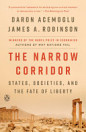
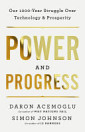
Daron Acemoglu is an Institute Professor at MIT. His previous books include the New York Times bestseller Why Nations Fail, The Narrow Corridor, and Power and Progress. He is a recipient of the John Bates Clark Medal, the BBVA award, the Erwin Plein Nemmers Prize in Economics, and the Nobel Memorial Prize in Economic Sciences.
Daron Acemoglu is an Institute Professor at MIT. His previous books include the New York Times bestseller Why Nations Fail, The Narrow Corridor, and Power and Progress. He is a recipient of the John Bates Clark Medal, the BBVA award, the Erwin Plein Nemmers Prize in Economics, and the Nobel Memor...
Rate this ebook
Tell us what you think.
Reading information
Smartphones and tablets
Install the Google Play Books app for Android and iPad/iPhone. It syncs automatically with your account and allows you to read online or offline wherever you are.
Laptops and computers
You can listen to audiobooks purchased on Google Play using your computer's web browser.
eReaders and other devices
To read on e-ink devices like Kobo eReaders, you'll need to download a file and transfer it to your device. Follow the detailed Help Center instructions to transfer the files to supported eReaders.