About this ebook
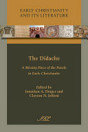
This volume offers an appreciation of the value of intertextuality—from Greek, Roman, Jewish, and biblical traditions—as related to the post-apostolic level of Christian development within the second century. Not least of these foundational pillars is the certain impact of the Second Sophistic movement during this period with its insipient influence on much of early Christian theology’s formation. The variety of these strands of inspiration created a tapestry of many diverse elements that came to shape the second-century Christian situation. Here one sees biblical texts at work, Jewish and Greek foundations at play, and interaction among patristic authors as they seek to reconcile their competing perspectives on what it meant to be “Christian” within the contemporary context.
This volume offers an appreciation of the value of intertextuality—from Greek, Roman, Jewish, and biblical traditions—as related to the post-apostolic level of Christian development within the second century. Not least of these foundational pillars is the certain impact of the Second Sophistic mo...
Discover more
About the author
D. Jeffrey Bingham is Associate Dean of Biblical and Theological Studies and Professor of Theology at Wheaton College. He has published widely on the reception of the Bible in early Christianity, second-century Christian theology, Irenaeus and Athenagoras.
Clayton N. Jefford is Professor of Scripture at Saint Meinrad Seminary and School of Theology in Indiana. His recent publications include Reading the Apostolic Fathers (2012), The Epistle to Diognetus (with the Fragment of Quadratus) (2013), and Didache (2013).
Clayton N. Jefford is Professor of Scripture at Saint Meinrad Seminary and School of Theology in Indiana. His recent publications include Reading the Apostolic Fathers (2012), The Epistle to Diognetus (with the Fragment of Quadratus) (2013), and Didache (2013).
D. Jeffrey Bingham is Associate Dean of Biblical and Theological Studies and Professor of Theology at Wheaton College. He has published widely on the reception of the Bible in early Christianity, second-century Christian theology, Irenaeus and Athenagoras.
Clayton N. Jefford is Professor of Scrip...
Rate this ebook
Tell us what you think.
Reading information
Smartphones and tablets
Install the Google Play Books app for Android and iPad/iPhone. It syncs automatically with your account and allows you to read online or offline wherever you are.
Laptops and computers
You can listen to audiobooks purchased on Google Play using your computer's web browser.
eReaders and other devices
To read on e-ink devices like Kobo eReaders, you'll need to download a file and transfer it to your device. Follow the detailed Help Center instructions to transfer the files to supported eReaders.