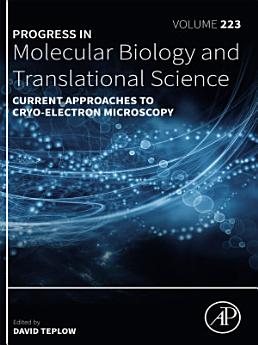
Current Approaches to Cryo-electron Microscopy

· Progress in Molecular Biology and Translational Science 第 223 本图书 · Academic Press
电子书
300
页
符合条件

关于此电子书

Current Approaches to Cryo-electron Microscopy, Volume 223 provides a comprehensive overview of the field, tracing its evolution from early structural studies to modern pipelines powered by deep-learning algorithms for helical reconstruction. The book addresses the persistent bottleneck of sample preparation, detailing the physical challenges of fibril clumping and interfacial adsorption, alongside emerging solutions to these problems. Chapters in this new release include Advancing biological understanding of the poxvirus scaffold through breakthroughs in cryo-electron microscopy, Pursuing the physics of cryoEM image formation, AI Tools for Cryo-EM: Protein Particle Picking, Density Map Enhancement, and Atomic Model Building, and much more.Additional chapters cover Cryo-EM of Amyloid Fibrils: Advances, Challenges, and Translational Applications, Computational Approaches for Protein Complex Modeling for Intermediate Resolution Cryo-EM Maps, Calcium-sensing receptor, involved in the oral perception of the kokumi substances, Insights into the Structure and Diversity of the Bacterial Flagellum from cryo-EM studies, Overview and future potential in structural studies of bacteriophages by cryo-electron microscopy, and more. - Reviews cryo-EM yields near-atomic structures that advance neurodegenerative/metabolic disease understanding and enable drug design - Provides information on deep-learning AI accelerates structure determination through image processing, map enhancement, and model building - Assesses key challenges and opportunities including sample prep bottlenecks, polymorphism, and using high-res maps to design inhibitors that disaggregate fibrils
Current Approaches to Cryo-electron Microscopy, Volume 223 provides a comprehensive overview of the field, tracing its evolution from early structural studies to modern pipelines powered by deep-learning algorithms for helical reconstruction. The book addresses the persistent bottleneck of sample...

探索更多

作者简介

David B. Teplow, Ph.D., is a Professor of Neurology, Emeritus, at UCLA and an internationally recognized leader in efforts to understand and treat Alzheimer's disease. Dr. Teplow's group has used a multi-disciplinary approach to determine how neurotoxic peptides, such as the amyloid β-protein (Alzheimer's disease) and α-synuclein (Parkinson’s disease), form neurotoxic structures that kill neurons and to develop the means to block these processes. Dr. Teplow received undergraduate training at UC Berkeley; a Ph.D. from the University of Washington; and was a postdoctoral scholar at Caltech. Before coming to UCLA, Dr. Teplow was a faculty member in the Department of Neurology, Harvard Medical School. Dr. Teplow has published >250 peer-reviewed articles, books and book chapters, and commentaries, in addition to serving on numerous national and international scientific advisory boards. Dr. Teplow was a founding editor of the Journal of Molecular Neuroscience and Current Chemical Biology, He is Editor-in-Chief of the Elsevier serial Progress in Molecular Biology and Translational Science and is Associate Editor-in-Chief of the American Journal of Neurodegenerative Disease.

David B. Teplow, Ph.D., is a Professor of Neurology, Emeritus, at UCLA and an internationally recognized leader in efforts to understand and treat Alzheimer's disease. Dr. Teplow's group has used a multi-disciplinary approach to determine how neurotoxic peptides, such as the amyloid β-protein (Al...

为此电子书评分

欢迎向我们提供反馈意见。

如何阅读

智能手机和平板电脑
只要安装 Android 和 iPad/iPhone 版的 Google Play 图书应用,不仅应用内容会自动与您的账号同步,还能让您随时随地在线或离线阅览图书。
笔记本电脑和台式机
您可以使用计算机的网络浏览器聆听您在 Google Play 购买的有声读物。
电子阅读器和其他设备
如果要在 Kobo 电子阅读器等电子墨水屏设备上阅读,您需要下载一个文件,并将其传输到相应设备上。若要将文件传输到受支持的电子阅读器上,请按帮助中心内的详细说明操作。