À propos de cet e-book
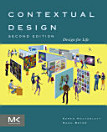
Contextual Design is a user-centered design process that uses in-depth field research to drive innovative design. Contextual Design was first invented in 1988 and has since been used in a wide variety of industries and taught in universities all over the world. It is a complete front-end design process rooted in Contextual Inquiry, the widespread, industry-standard field data gathering technique. Contextual Design adds techniques to analyze and present user data, drive ideation from data, design specific product solutions, and iterate those solutions with customers. In 2013, we overhauled the method to account for the way that technology has radically changed people’s lives since the invention of the touchscreen phones and other always-on, always-connected, and always-carried devices. This book describes the new Contextual Design, evolved to help teams design for the way technology now fits into peoples’ lives. We briefly describe the steps of the latest version of Contextual Design and show how they create a continual immersion in the world of the user for the purpose of innovative product design.
Contextual Design is a user-centered design process that uses in-depth field research to drive innovative design. Contextual Design was first invented in 1988 and has since been used in a wide variety of industries and taught in universities all over the world. It is a complete front-end design p...
En voir d'autres
À propos de l'auteur
Karen Holtzblatt, CEO and Co-founder of InContext, is the visionary behind InContext's unique customer-centered design approach, Contextual Design. Karen's combination of technological and psychological expertise provides the creative framework for driving the development, innovative designs, and design processes. Recognized as a leader in requirements and design, Karen has pioneered transformative ideas and design approaches throughout her career. Most recently, Karen initiated the Cool Project to explore users' experience of cool products. The November issue of Interactions showcases the core factors affecting the ""cool"" user experience in the cover story, ""What Makes Things Cool?"" Karen introduced Contextual Inquiry, now the industry standard for gathering field data to understand how technology impacts the way people work. Contextual Inquiry and the design processes based on it provide a revolutionary approach for designing new products and systems based on a deep understandingof the context of use. Contextual Inquiry forms the base of Contextual Design, InContext's full customer-centered design process. Karen co-founded InContext Design in 1992 to use Contextual Design techniques to coach product teams and deliver market data and design solutions to businesses across multiple industries. The books, Contextual Design: Defining Customer Centered Systems and Rapid Contextual Design, are used by companies and universities worldwide. As a member of ACM CHI (the association for computer-human interaction), Karen was awarded membership to the CHI Academy, a gathering of significant contributors, and received the first Lifetime Award for Practice, presented to her in 2010, for her impact on the field. Karen has more than 25 years of teaching experience, both professionally and in university settings. She holds a doctorate in applied psychology from the University of Toronto.Hugh Beyer has more than 20 years of experience building and designing applications, systems, and tools. He is co-founder of InContext Design, a user-centered design firm using Contextual Design's user-centered techniques to deliver data and design solutions with client teams across multiple industries. Hugh has designed solutions in the automotive, health care, security, call center, financial, and insurance industries. Hugh provides the technical expertise and Agile know-how behind InContext's offerings. He works closely with clients engineering and design teams to mesh often opposing points of view and build innovative solutions in virtually any development environment. Hugh's extensive understanding of the unique and varied capabilities of a wide range of technical platforms enables InContext to design innovative solutions. Hugh also works directly with InContext's design teams and coaches client teams in the Contextual Design process. He has pioneered the integration of customer-centered techniques into traditional development, using them to supercharge the Rational Unified Process, object-oriented design, and Agile. Hugh is the co-author of Contextual Design: Defining Customer Centered Systems which is used by companies and universities worldwide. Hugh's latest publication is User-Centered Agile Methods, which bridges the gap between the Agile development and UX communities. Before co-founding InContext, Hugh acted as lead developer and architect in a range of systems at Digital Equipment Corp. His domains of experience include object-oriented repositories, databases, and integrated software development environments. Since starting InContext, Hugh has overseen the design of applications from desktop to Web to mobile, and from enterprise to small business to consumers in the wide variety of industries supported by InContext. He holds a B.S. degree in applied mathematics from Harvard.
Karen Holtzblatt, CEO and Co-founder of InContext, is the visionary behind InContext's unique customer-centered design approach, Contextual Design. Karen's combination of technological and psychological expertise provides the creative framework for driving the development, innovative designs, and...
Donner une note à cet e-book
Dites-nous ce que vous en pensez.
Informations sur la lecture
Smartphones et tablettes
Installez l'application Google Play Livres pour Android et iPad ou iPhone. Elle se synchronise automatiquement avec votre compte et vous permet de lire des livres en ligne ou hors connexion, où que vous soyez.
Ordinateurs portables et de bureau
Vous pouvez écouter les livres audio achetés sur Google Play à l'aide du navigateur Web de votre ordinateur.
Liseuses et autres appareils
Pour lire sur des appareils e-Ink, comme les liseuses Kobo, vous devez télécharger un fichier et le transférer sur l'appareil en question. Suivez les instructions détaillées du Centre d'aide pour transférer les fichiers sur les liseuses compatibles.