About this ebook
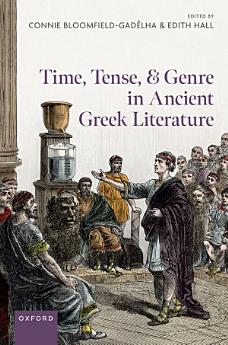
The 24 essays collected in this book address the complex interactions between concepts of time, grammatical tense, and type of genre of prose or poetry in ancient Greek literature. The chronological scope stretches across nearly a millennium from archaic epic to the Second Sophistic, from the emotional intensity of Homer to Plutarch and the playfulness of Lucian, tracing patterns, developments, contrasts, and intertextual allusiveness across diverse texts and authors. These include dramatists (Aeschylus, Euripides, Sophocles, and Aristophanes), philosophers (Plato), lyricists (Alcman and Sappho), ancient literary critics (Dionysius of Halicarnassus), orators (whose lawcourt speeches were delivered literally 'against the clock' in the form of the clepsydra), Hellenistic poets (Apollonius and Lycophron), historiographers (Herodotus) and the fabulist Aesop. The structure is informed by Greek philosophical categories, exploring discrete metaphysical, psychological, aetiological, and ethical ideas about temporality; the collective project of the volume is to investigate how authors manipulated not only tenses but imagery, moods, and metres, as well as generic conventions, in shaping and articulating notions about orality, literariness, subjectivity, immediacy, presence, futurity, causation, gender, sexuality, ethnography, cosmology, and remotest prehistory. The result is a pioneering, unique, and multifaceted volume that throws light not only on the rich linguistic resources of the ancient Greek language in evoking time, but on surprising interconnections between genres often studied in isolation.
The 24 essays collected in this book address the complex interactions between concepts of time, grammatical tense, and type of genre of prose or poetry in ancient Greek literature. The chronological scope stretches across nearly a millennium from archaic epic to the Second Sophistic, from the emo...
About the author
Connie Bloomfield-Gadêlha is a Lecturer in Classics and Liberal Arts at the University of Bristol. Previously, Connie was the Drapers' Research Fellow at Pembroke College, Cambridge. She studied Classics at Oxford, Comparative Literature at Cambridge, and completed her doctorate on syncretic uses of Graeco-Roman antiquity in Northeast-Brazilian popular oral poetry at King's College, London. She continues to work on both Latin American classical receptions and ancient Greek and Latin literature, with particular interests in orality and popular culture. Connie collaborates with contemporary poets and visual artists in the UK, Brazil, and Mexico, and is translating Mexican poet Pura López Colomé's collection Via Corporis into English. Edith Hall, Fellow of the British Academy, took up a Chair in Classics at Durham University in 2022, after holding posts at the Universities of Reading, Oxford, Cambridge, Royal Holloway, and King's College London. She has published more than thirty books, broadcasts on the BBC, and acts as consultant to professional theatres including the National Theatre, the Old Vic and the Royal Shakespeare Company. She leads a campaign to increase access to classical subjects within state education. She has been awarded Honorary Doctorates by Athens and Durham Universities, the Erasmus Medal of the European Academy, and Honorary Citizenship of Palermo.
Connie Bloomfield-Gadêlha is a Lecturer in Classics and Liberal Arts at the University of Bristol. Previously, Connie was the Drapers' Research Fellow at Pembroke College, Cambridge. She studied Classics at Oxford, Comparative Literature at Cambridge, and completed her doctorate on syncretic uses...
Rate this ebook
Tell us what you think.
Reading information
Smartphones and tablets
Install the Google Play Books app for Android and iPad/iPhone. It syncs automatically with your account and allows you to read online or offline wherever you are.
Laptops and computers
You can listen to audiobooks purchased on Google Play using your computer's web browser.
eReaders and other devices
To read on e-ink devices like Kobo eReaders, you'll need to download a file and transfer it to your device. Follow the detailed Help Center instructions to transfer the files to supported eReaders.