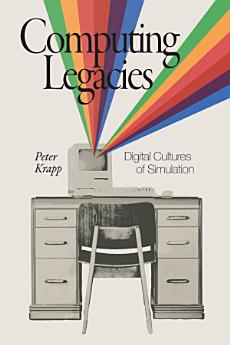
Computing Legacies: Digital Cultures of Simulation
dic 2024 · MIT Press
eBook
228
Páginas
Herramientas
info
family_home
Apto
info
Información sobre este eBook
A media history of simulation that contextualizes our digital heritage and the history of computing.
In Computing Legacies, Peter Krapp explores a media history of simulation to excavate three salient aspects of digital culture. Firstly, he profiles simulation as cultural technique, enabling symbolic work and foregrounding hypothetical literacy. Secondly, he positions simulation as crucial for the preservation of cultural memory, where modeling, emulation, and serious play are constitutive in how we relate to our mediated history. And lastly, despite suggestions that we may already live in a simulation, he interrogates how simulation can serve as critique of the computer age.
In tracing our digital heritage, Computing Legacies elucidates inflection points where quantitative data becomes tractable for qualitative evaluations: modeling epidemics for scientific study or entertainment, emulating older devices, turning numerical calculations into music, conducting espionage in virtual worlds, and gamifying higher education. Simulation, this book demonstrates, is pivotal not only to high-tech research and to archives, museums, and the preservation of digital culture but also to our understanding of what it is to live and work under the technical conditions of computing.
In Computing Legacies, Peter Krapp explores a media history of simulation to excavate three salient aspects of digital culture. Firstly, he profiles simulation as cultural technique, enabling symbolic work and foregrounding hypothetical literacy. Secondly, he positions simulation as crucial for the preservation of cultural memory, where modeling, emulation, and serious play are constitutive in how we relate to our mediated history. And lastly, despite suggestions that we may already live in a simulation, he interrogates how simulation can serve as critique of the computer age.
In tracing our digital heritage, Computing Legacies elucidates inflection points where quantitative data becomes tractable for qualitative evaluations: modeling epidemics for scientific study or entertainment, emulating older devices, turning numerical calculations into music, conducting espionage in virtual worlds, and gamifying higher education. Simulation, this book demonstrates, is pivotal not only to high-tech research and to archives, museums, and the preservation of digital culture but also to our understanding of what it is to live and work under the technical conditions of computing.
A media history of simulation that contextualizes our digital heritage and the history of computing.
In Computing Legacies, Peter Krapp explores a media history of simulation to excavate three salient aspects of digital culture. Firstly, he profiles simulation as cultural technique, enabling sym...
Descubre más
Acerca del autor
Peter Krapp is Professor of Film and Media Studies at the University of California, Irvine, where he is also affiliated with the departments of English, Music, and Informatics.
Peter Krapp is Professor of Film and Media Studies at the University of California, Irvine, where he is also affiliated with the departments of English, Music, and Informatics.
Valorar este eBook
Danos tu opinión.
Información sobre cómo leer
Smartphones y tablets
Instala la aplicación Google Play Libros para Android y iPad/iPhone. Se sincroniza automáticamente con tu cuenta y te permite leer contenido online o sin conexión estés donde estés.
Ordenadores portátiles y de escritorio
Puedes usar el navegador web del ordenador para escuchar audiolibros que hayas comprado en Google Play.
eReaders y otros dispositivos
Para leer en dispositivos de tinta electrónica, como los lectores de libros electrónicos de Kobo, es necesario descargar un archivo y transferirlo al dispositivo. Sigue las instrucciones detalladas del Centro de Ayuda para transferir archivos a lectores de libros electrónicos compatibles.