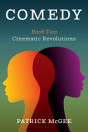
Comedy, Book Two: Cinematic Revolutions
2022年6月 · Wipf and Stock Publishers
電子書籍
186
ページ
ツール
info
family_home
利用可能
info
この電子書籍について
Comedy is a philosophical poem in the form of waking dream, inspired by Dante and William Blake. In book two, Cinematic Revolutions, the narrator, having passed through a cinema screen at the end of book one, arrives in the middle of a World War I field of dying men. An indescribable human figure appears who warns that these cinematic images are not real but projections of the cinematic mind with its power of empathy. Assuming different shapes and identities, this generic being becomes the narrator's guide. Through a series of dialogues and encounters, cinema and the visual culture it generates are identified with a cultural revolution--the nonviolent revolution--that surpasses the violent revolutions of the twentieth century. This view is articulated through encounters with Russian revolutionary Trotsky, twelve modernist writers and the philosopher Wittgenstein, Hitchcock, three dictators (Hitler, Stalin, Mao), a cinematic Jesus Christ, Holocaust historian Raul Hilberg, Martin Luther King, Malcolm X, and James Baldwin. Interspersed among these encounters are cinematic visions from directors like Eisenstein, Chaplin, and others. From Paris to Memphis, passing through Pasolini's black and white desert in Gospel according to Saint Matthew, descending into the dark underworld of Fritz Lang's Metropolis, rising into a Hollywood heaven of the forties, and standing on top of the Empire State Building with King Kong, cinematic images channel revolutionary desires and the necessity of nonviolence.
Comedy is a philosophical poem in the form of waking dream, inspired by Dante and William Blake. In book two, Cinematic Revolutions, the narrator, having passed through a cinema screen at the end of book one, arrives in the middle of a World War I field of dying men. An indescribable human figure...
著者について
Patrick McGee is emeritus professor from Louisiana State University, where he taught modern literature, film, and critical theory. He is the author of ten previous books, including Archival Resurrections, book one of Comedy, and Political Monsters and Democratic Imagination: Spinoza, Blake, Hugo, Joyce. He currently lives in Seattle.
Patrick McGee is emeritus professor from Louisiana State University, where he taught modern literature, film, and critical theory. He is the author of ten previous books, including Archival Resurrections, book one of Comedy, and Political Monsters and Democratic Imagination: Spinoza, Blake, Hugo,...
この電子書籍を評価する
ご感想をお聞かせください。
読書情報
スマートフォンとタブレット
Android や iPad / iPhone 用の Google Play ブックス アプリをインストールしてください。このアプリがアカウントと自動的に同期するため、どこでもオンラインやオフラインで読むことができます。
ノートパソコンとデスクトップ パソコン
Google Play で購入したオーディブックは、パソコンのウェブブラウザで再生できます。
電子書籍リーダーなどのデバイス
Kobo 電子書籍リーダーなどの E Ink デバイスで読むには、ファイルをダウンロードしてデバイスに転送する必要があります。サポートされている電子書籍リーダーにファイルを転送する方法について詳しくは、ヘルプセンターをご覧ください。