এই ইবুকখনৰ বিষয়ে
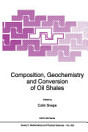
Collision-or interaction-induced spectroscopy refers to radiative transitions, which are forbidden in free atoms or molecules, but which occur in clusters of interacting atoms or molecules. The most common phenomena are induced absorption, in the infrared region, and induced light scattering, which involves inelastic scattering of visible laser light. The particle interactions giving rise to the necessary induced dipole moments and polarizabilities are modelled at long range by multipole expansions; at short range, electron overlap and exchange mechanisms come into play. Information on atomic and molecular interactions and dynamics in dense media on a picosecond timescale may be drawn from the spectra. Collision-induced absorption in the infrared was discovered at the University of Toronto in 1949 by Crawford, Welsh and Locke who studied liquid O and N. Through the 1950s and 1960s, 2 2 experimental elucidation of the phenomenon, particularly in gases, continued and theoretical underpinnings were established. In the late 1960s, the related phenomenon of collision-induced light scattering was first observed in compressed inert gases. In 1978, an 'Enrico Fermi' Summer School was held at Varenna, Italy, under the directorship of J. Van Kranendonk. The lectures, there, reviewed activity from the previous two decades, during which the approach to the subject had not changed greatly. In 1983, a highly successful NATO Advanced Research Workshop was held at Bonas, France, under the directorship of G. Birnbaum. An important outcome of that meeting was the demonstration of the maturity and sophistication of current experimental and theoretical techniques.
Collision-or interaction-induced spectroscopy refers to radiative transitions, which are forbidden in free atoms or molecules, but which occur in clusters of interacting atoms or molecules. The most common phenomena are induced absorption, in the infrared region, and induced light scattering, whi...
অধিক বিচাৰি পাওক
এই ইবুকখনক মূল্যাংকন কৰক
আমাক আপোনাৰ মতামত জনাওক।
পঢ়াৰ নির্দেশাৱলী
স্মাৰ্টফ’ন আৰু টেবলেট
Android আৰু iPad/iPhoneৰ বাবে Google Play Books এপটো ইনষ্টল কৰক। ই স্বয়ংক্রিয়ভাৱে আপোনাৰ একাউণ্টৰ সৈতে ছিংক হয় আৰু আপুনি য'তে নাথাকক ত'তেই কোনো অডিঅ'বুক অনলাইন বা অফলাইনত শুনিবলৈ সুবিধা দিয়ে।
লেপটপ আৰু কম্পিউটাৰ
আপুনি কম্পিউটাৰৰ ৱেব ব্রাউজাৰ ব্যৱহাৰ কৰি Google Playত কিনা অডিঅ'বুকসমূহ শুনিব পাৰে।
ই-ৰীডাৰ আৰু অন্য ডিভাইচ
Kobo eReadersৰ দৰে ই-চিয়াঁহীৰ ডিভাইচসমূহত পঢ়িবলৈ, আপুনি এটা ফাইল ডাউনল’ড কৰি সেইটো আপোনাৰ ডিভাইচলৈ স্থানান্তৰণ কৰিব লাগিব। সমৰ্থিত ই-ৰিডাৰলৈ ফাইলটো কেনেকৈ স্থানান্তৰ কৰিব জানিবলৈ সহায় কেন্দ্ৰত থকা সবিশেষ নিৰ্দেশাৱলী চাওক।