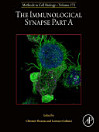
The Immunological Synapse - Part B

·
· Methods in Cell Biology Book 178 · Elsevier
Ebook
318
Pages
Eligible

About this ebook

The Immunological Synapse - Part B, Volume 178 in the Methods in Cell Biology series provides state-of-the-art methods for the study of the immunological synapse. This first volume covers various aspects on T cell and natural killer (NK) cell synapses, including imaging polarized granule release using TIRF microscopy, analysis of actin reorganization and centrosome polarization, redirected degranulation, live cell-imaging to quantify cytotoxic and chemotactic dynamics, quantification of interactions between APCs and T cells, assessment of membrane lipid state at the immunological synapse, proteomic analysis and imaging of NK-tumor cell interaction, evaluating natural killer cell effector functions against breast cancer cells derived from human tumor tissue, evaluation of chimeric antigen receptor (CAR)-modified cell immunological synapse quality using the glass-supported planar lipid bilayer, and monitoring potency of therapeutic CAR T cells. It also includes one chapter on quantification of lymphocytic choriomeningitis virus specific T cells and LCMV viral titers, and one chapter on the murine antibody-dependent cellular phagocytosis assay. - Covers various methods related to the study of the immunological synapse - Includes detailed, point-by-point, methods as well as various important notes - Provides the authority and expertise from an international board of leading scientists
The Immunological Synapse - Part B, Volume 178 in the Methods in Cell Biology series provides state-of-the-art methods for the study of the immunological synapse. This first volume covers various aspects on T cell and natural killer (NK) cell synapses, including imaging polarized granule release ...

Discover more

About the author

Clément Thomas, Ph.D. is a research group leader at the Department of Cancer Research of the Luxembourg Institute of Health, Luxembourg. He received his Ph.D. in Molecular and Cellular Biology from the University of Strasbourg. Over the last 15 years, his group has developed extensive knowledge and expertise in the mechanisms regulating actin cytoskeleton organization and dynamics, as well as in live cell imaging approaches. His current research is centered on the role of the actin cytoskeleton in tumor immune evasion.

Lorenzo Galluzzi is Assistant Professor of Cell Biology in Radiation Oncology at the Department of Radiation Oncology of the Weill Cornell Medical College, Honorary Assistant Professor Adjunct with the Department of Dermatology of the Yale School of Medicine, Honorary Associate Professor with the Faculty of Medicine of the University of Paris, and Faculty Member with the Graduate School of Biomedical Sciences and Biotechnology of the University of Ferrara, the Graduate School of Pharmacological Sciences of the University of Padova, and the Graduate School of Network Oncology and Precision Medicine of the University of Rome “La Sapienza. Moreover, he is Associate Director of the European Academy for Tumor Immunology and Founding Member of the European Research Institute for Integrated Cellular Pathology.Galluzzi is best known for major experimental and conceptual contributions to the fields of cell death, autophagy, tumor metabolism and tumor immunology. He has published over 450 articles in international peer-reviewed journals and is the Editor-in-Chief of four journals:OncoImmunology (which he co-founded in 2011), International Review of Cell and Molecular Biology, Methods in Cell biology, and Molecular and Cellular Oncology (which he co-founded in 2013). Additionally, he serves as Founding Editor for Microbial Cell and Cell Stress, and Associate Editor for Cell Death and Disease, Pharmacological Research and iScience.
Clément Thomas, Ph.D. is a research group leader at the Department of Cancer Research of the Luxembourg Institute of Health, Luxembourg. He received his Ph.D. in Molecular and Cellular Biology from the University of Strasbourg. Over the last 15 years, his group has developed extensive knowledge a...

Rate this ebook

Tell us what you think.

Reading information

Smartphones and tablets
Install the Google Play Books app for Android and iPad/iPhone. It syncs automatically with your account and allows you to read online or offline wherever you are.
Laptops and computers
You can listen to audiobooks purchased on Google Play using your computer's web browser.
eReaders and other devices
To read on e-ink devices like Kobo eReaders, you'll need to download a file and transfer it to your device. Follow the detailed Help Center instructions to transfer the files to supported eReaders.