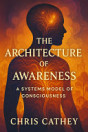
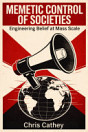
About this ebook
For decades, neuroscience has explained how the brain processes information. What it has not explained is why those processes feel like anything at all. This is the hard problem of consciousness.
This book does not claim to solve that problem.
It does something more practical.
Drawing from NLP, systems theory, and the philosophy of mind, Chris Cathey presents a framework in which qualia—the felt qualities of experience—are not abstract or ineffable, but structured. These structures, known as submodalities, form the internal architecture of perception itself.
Inside, you’ll discover:
• Why experience is constructed rather than received
• How attractor states stabilize emotional and cognitive patterns
• The structural differences between thoughts, memories, and feelings
• How submodalities determine intensity, meaning, and response
• Why traditional cognitive approaches often fail to produce lasting change
• A practical methodology for investigating and altering inner experience
This is not a self-help book.
It is a model of how consciousness organizes itself from the inside, and a guide to working directly with that organization.
For readers of cognitive science, philosophy of mind, NLP, and applied psychology, The Living Interior offers a new way to understand—and influence—the structure of experience itself.
About the author
Chris Cathey is an author and systems thinker whose work explores how human perception, belief, and behavior are shaped by cognitive structure, narrative environments, and modern information systems. His books examine perception as a predictive process, identity as a stabilized mental model, and influence as an environmental force rather than simple persuasion. Drawing from cognitive science, psychology, philosophy, and systems theory, Cathey analyzes how individual minds synchronize into collective realities—and how those realities are constructed, reinforced, and manipulated in the digital age. His writing bridges theory and application, offering a rigorous framework for understanding mass psychology, narrative control, cognitive warfare, and the technological mediation of human awareness. His work focuses on describing how meaning systems function, stabilize, and fail under pressure, providing readers with tools to better understand the invisible forces shaping modern society.