About this ebook
For most people the mention of graffiti conjures up notions of subversion, defacement, and underground culture. Yet, the term was coined by classical archaeologists excavating Pompeii in the 19th century and has been embraced by modern street culture: graffiti have been left on natural sites and public monuments for tens of thousands of years. They mark a position in time, a relation to space, and a territorial claim. They are also material displays of individual identity and social interaction. As an effective, socially accepted medium of self-definition, ancient graffiti may be compared to the modern use of social networks.
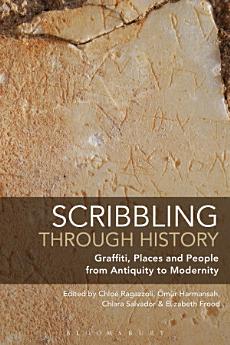
This book shows that graffiti, a very ancient practice long hidden behind modern disapproval and street culture, have been integral to literacy and self-expression throughout history. Graffiti bear witness to social events and religious practices that are difficult to track in normative and official discourses. This book addresses graffiti practices, in cultures ranging from ancient China and Egypt through early modern Europe to modern Turkey, in illustrated short essays by specialists. It proposes a holistic approach to graffiti as a cultural practice that plays a key role in crucial aspects of human experience and how they can be understood.
This book shows that graffiti, a very ancient practice long hidden behind modern disapproval and street culture, have been integral to literacy and self-expression throughout history. Graffiti bear witness to social events and religious practices that are difficult to track in normative and official discourses. This book addresses graffiti practices, in cultures ranging from ancient China and Egypt through early modern Europe to modern Turkey, in illustrated short essays by specialists. It proposes a holistic approach to graffiti as a cultural practice that plays a key role in crucial aspects of human experience and how they can be understood.
For most people the mention of graffiti conjures up notions of subversion, defacement, and underground culture. Yet, the term was coined by classical archaeologists excavating Pompeii in the 19th century and has been embraced by modern street culture: graffiti have been left on natural sites and ...
Discover more
About the author
Chloé Ragazzoli is Associate Professor of Egyptology at the History Faculty of University Paris Sorbonne, France. She is the author of Eloge de la Ville. Histoire et Littérature (2008) and La grotte des scribes à Deir el-Bahari. La tombe MMA 504 et ses graffiti (forthcoming).
Ömür Harmansah is Associate Professor of Art History, University of Illinois at Chicago, USA. His work focuses on the art and material culture of the ancient Near Eastern world, with particular emphasis on Anatolia, Syria and Mesopotamia. He is the author of Cities and the Shaping of Memory in the Ancient Near East (2013) and Place, Memory and Healing: An Archaeology of Anatolian Rock Monuments (2015).
Chiara Salvador is reading for a doctorate in Egyptology at the University of Oxford, UK. Her research treats a corpus of hieratic, hieroglyphic and figural graffiti from the temple complex of Karnak, in modern Luxor with the support of the Centre Franco-Égyptien d'Étude des Temples de Karnak.
Elizabeth Frood is Associate Professor of Egyptology and Fellow of St Cross College, University of Oxford, UK. She is author of Biographical Texts from Ramessid Egypt (2007). She is currently preparing publications of graffiti from two areas of the temple complex at Karnak, in collaboration with the Centre Franco-Égyptien d'Étude des Temples de Karnak.
Chloé Ragazzoli is Associate Professor of Egyptology at the History Faculty of University Paris Sorbonne, France. She is the author of Eloge de la Ville. Histoire et Littérature (2008) and La grotte des scribes à Deir el-Bahari. La tombe MMA 504 et ses graffiti (forthcoming).
Ömür Harmansah is A...
Rate this ebook
Tell us what you think.
Reading information
Smartphones and tablets
Install the Google Play Books app for Android and iPad/iPhone. It syncs automatically with your account and allows you to read online or offline wherever you are.
Laptops and computers
You can listen to audiobooks purchased on Google Play using your computer's web browser.
eReaders and other devices
To read on e-ink devices like Kobo eReaders, you'll need to download a file and transfer it to your device. Follow the detailed Help Center instructions to transfer the files to supported eReaders.