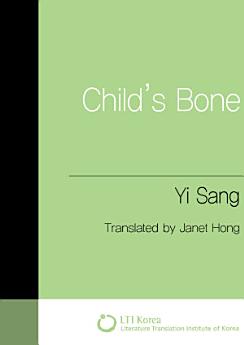
Child’s Bone

· 20th Century Korean Literature Cartea 14 · Literature Translation Institute of Korea
8 recenzii
Carte electronică
43
Pagini
Instrumente

Despre această carte electronică

“Child’s Bone” (1937), which is written in the stream of consciousness narrative style, skillfully depicts the love and affection between a woman named “Yim” and the two men in her life—Yun and the narrator. In order to rescue this common subject from its conventional treatment, he uses various techniques. The story is composed of six natural scenes, like that from a play, from which the narrator’s inner thoughts and feelings flow out. Thus, Yi Sang shows the reader the true condition of the psychological novel.

“Child’s Bone” (1937), which is written in the stream of consciousness narrative style, skillfully depicts the love and affection between a woman named “Yim” and the two men in her life—Yun and the narrator. In order to rescue this common subject from its conventional treatment, he uses various t...

Descoperă mai multe

Evaluări și recenzii

8 recenzii

Despre autor

 Yi Sang (1910-1937) was one of Korea’s most innovative writers of modern literature, enough to deem him Korea’s finest modernist. He died at the early age of 27, but despite his short literary career, he produced surreal and highly experimental pieces that were avant-garde and far ahead of their time. He showed brilliant literary prowess not only in poetry and fiction, but also in essays, exploring the confusion and anxiety of those living under Japanese colonial rule, the psychology and despair of uprooted urban dwellers, and the alienation, disquiet, and terror experienced by intellectuals, more than perhaps any other writer in Korean history. He did not shy away from presenting decadent subject matter, and experimented ceaselessly with form, created self-deprecating characters with excessive self-consciousness, portrayed the delirium of sensation, and employed wit, paradox, montage, and other various techniques all to brilliant, enigmatic effect, to the extent that his works resist easy comprehension even to this day. These are the reasons why he was heralded as a “modern boy,” who sprung onto the literary scene during Korea’s dark colonial period.

Yi Sang’s fiction is largely autobiographical. From his sole novel December 12 all the way to his short story “Dying Words,” Yi Sang has used his own life as material. However through his unique method of processing those experiences, in other words, through his unique artistic method of handling language, his work continues to be cutting-edge even today.
Yi Sang (1910-1937) was one of Korea’s most innovative writers of modern literature, enough to deem him Korea’s finest modernist. He died at the early age of 27, but despite his short literary career, he produced surreal and highly experimental pieces that were avant-garde and far ahead of their...

Evaluează cartea electronică

Spune-ne ce crezi.

Informații despre lectură

Smartphone-uri și tablete
Instalează aplicația Cărți Google Play pentru Android și iPad/iPhone. Se sincronizează automat cu contul tău și poți să citești online sau offline de oriunde te afli.
Laptopuri și computere
Poți să asculți cărțile audio achiziționate pe Google Play folosind browserul web al computerului.
Dispozitive eReader și alte dispozitive
Ca să citești pe dispozitive pentru citit cărți electronice, cum ar fi eReaderul Kobo, trebuie să descarci un fișier și să îl transferi pe dispozitiv. Urmează instrucțiunile detaliate din Centrul de ajutor pentru a transfera fișiere pe dispozitivele eReader compatibile.