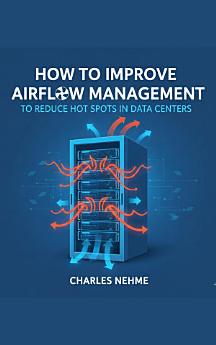
How to Improve Airflow Management to Reduce Hot Spots in Data Centers
About this ebook
For too long, the industry has relied on over-cooling—an expensive and unsustainable approach to compensating for fundamental design and operational flaws. The result is wasted energy and, paradoxically, the persistent problem of hot spots. These localized areas of extreme heat are silent killers, leading to equipment failure, reduced lifespan of critical IT assets, and inevitable downtime.
This book, How to Improve Airflow Management to Reduce Hot Spots in Data Centers, is a direct response to this challenge. It moves beyond the simple solution of "turn the AC down" and provides a structured, practical, and comprehensive guide to optimizing the thermal ecosystem of your data center.
We start with the diagnostic power of Computational Fluid Dynamics (CFD) and progress through every layer of the facility: the underfloor plenum, the containment system, the rack, and the cable infrastructure. Our goal is singular: to eliminate wasted airflow, deliver cold air precisely where it is needed, and dramatically improve your facility's Power Usage Effectiveness (PUE) without compromising—and indeed, while enhancing—resilience.
This is not a theoretical exercise. It is a playbook built on years of real-world experience, offering actionable steps for every professional responsible for keeping the lights on and the servers cool.
Discover more
Ratings and reviews
About the author
Charles Nehme is a seasoned mechanical engineer and highly sought-after HVAC consultant specializing in complex climate control environments, including commercial greenhouses, medical facilities, and industrial cleanrooms. With a career spanning decades, the author has dedicated their expertise to designing, optimizing, and troubleshooting systems that ensure precise environmental stability.
Driven by a passion for sustainability and energy efficiency, the author brings a unique perspective that integrates horticultural science with hard engineering principles. They have successfully guided numerous organizations across the globe in transforming problematic growing spaces into highly productive, energy-efficient operations. This book distills that practical, on-site knowledge into an accessible guide for growers seeking mastery over their environmental controls.
As a consultant, Charles Nehme continues to work with clients worldwide, providing remote and hybrid assistance for projects requiring advanced HVAC and humidity expertise.