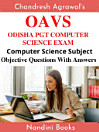
About this ebook
Total Question Count: 1,000+ Verified MCQs.
Primary Category: Education / Computer Science / Careers.
Format: Digital PDF (A4 size) optimized for printing.
Target Audience: Final-year CS students, Graduate job seekers, and IT certification aspirants (USA, Canada, Australia, UK, India).
Keywords: Tech Interview Prep, CS Fundamentals, Data Structures MCQs, Networking Practice, Operating Systems Guide.
The "DIY" Concept: Professional Quality at Student Prices
This ebook is designed for the modern "Do-It-Yourself" learner. Instead of paying premium prices for a bulky physical textbook, you receive a high-resolution, print-ready PDF.
Download: Get instant access to the digital file.
Print: Use a home printer or local print shop to take a high-quality A4 printout.
Bind: Get it spiral-bound for a flat-lay study experience—ideal for highlighting and taking notes during intense study sessions.
Description: Cracking the Tech Interview
This ebook is a high-volume, technical drill-bank designed for computer science students and IT professionals. It compiles over 1,000 "Previous Years' Questions" from various competitive exams to provide a rigorous testing ground for core technical competencies. Unlike narrative textbooks, this guide focuses on immediate application through Multiple Choice Questions (MCQs) and detailed answer keys.
What is Covered
The content offers a deep dive into the "Big Five" domains of Computer Science:
Data Structures & Algorithms: Extensive practice on linear search complexity ($O(n)$), stack operations for postfix evaluation, binary tree traversals (In-order/Pre-order), and heap management.
Database Management Systems (DBMS): Focuses on the 3-level RDBMS architecture (Conceptual, Internal, External), natural joins, cardinality, and SQL query syntax for filtering and selection.
Networking & Security: Comprehensive coverage of the OSI model, IP addressing (IPv4/IPv6), protocols like TCP/UDP, ICMP, and DNS, alongside encryption methods like Caesar and Vigenere ciphers.
Operating Systems (OS): Core concepts including process scheduling (SJF, Priority), memory management (paging, virtual memory), Banker’s algorithm for deadlock, and Linux/Unix commands.
Software Engineering & Programming: Software development life cycles (SDLC) like Waterfall and Spiral models, Java exception handling, and object-oriented principles such as multiple inheritance.
What is NOT Covered
To maintain transparency, note that the following are absent:
Narrative Theory: The book contains no explanatory chapters or introductory text; it is strictly a question-and-answer resource.
Step-by-Step Coding Tutorials: While logic and pseudocode are tested, there are no long-form coding tutorials for languages like Python or JavaScript.
Full-Length Case Studies: The content is modular (MCQs) and does not provide complex, multi-page business case studies.