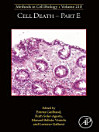
Cell Death Part D

· · ·
· Methods in Cell Biology Libro 209 · Academic Press
Libro electrónico
318
Páxinas
Apto

Acerca deste libro electrónico

Cell Death, Part D, Volume 209 explores the latest advances in the mechanisms, regulation, and significance of cell death in health and disease. Covering diverse topics such as apoptosis, necrosis, autophagy, and emerging pathways, this volume presents chapters on Utilizing FLAMBE to study the structure-function relationship and regulation of monomeric BAX activation in solution, Sensitive detection of Lysosomal Membrane Permeabilization using the Galectin Puncta Assay, Assessing the activity of caspase-activated pannexin-1 channels by flow cytometry, In vitro culture of intestinal organoids for cell death assessments, Optimized Strategies for Necroptosis Induction and Evaluation, and more.Additional sections cover Ferroptosis induction via genetic approaches - CRISPR/Cas9-based disruption on key anti-ferroptotic genes, Reprogramming T cell fate through antibody-mediated galectin-1 blockade, 3D bioluminescence imaging assays for measuring in vitro CAR T cell cytotoxicity, The heat-ramp method to study regulated cell death in the pathogenic yeast Cryptococcus neoformans, High throughput assessment of cellular viability, and High-Throughput Screening for Cell Death Inducers and Inhibitors. This book will serve as a valuable resource for researchers, clinicians, and students interested in understanding cellular processes and their implications for therapy and diagnostics. - Includes comprehensive coverage of the latest research and advances in cell death mechanisms - Provides in-depth discussions on apoptosis, necrosis, autophagy, and other programmed cell death pathways - Contains contributions from leading experts in cellular biology and molecular medicine
Cell Death, Part D, Volume 209 explores the latest advances in the mechanisms, regulation, and significance of cell death in health and disease. Covering diverse topics such as apoptosis, necrosis, autophagy, and emerging pathways, this volume presents chapters on Utilizing FLAMBE to study the st...

Descubrir máis

Acerca do autor

Lorenzo Galluzzi is Assistant Professor of Cell Biology in Radiation Oncology at the Department of Radiation Oncology of the Weill Cornell Medical College, Honorary Assistant Professor Adjunct with the Department of Dermatology of the Yale School of Medicine, Honorary Associate Professor with the Faculty of Medicine of the University of Paris, and Faculty Member with the Graduate School of Biomedical Sciences and Biotechnology of the University of Ferrara, the Graduate School of Pharmacological Sciences of the University of Padova, and the Graduate School of Network Oncology and Precision Medicine of the University of Rome “La Sapienza. Moreover, he is Associate Director of the European Academy for Tumor Immunology and Founding Member of the European Research Institute for Integrated Cellular Pathology.Galluzzi is best known for major experimental and conceptual contributions to the fields of cell death, autophagy, tumor metabolism and tumor immunology. He has published over 450 articles in international peer-reviewed journals and is the Editor-in-Chief of four journals:OncoImmunology (which he co-founded in 2011), International Review of Cell and Molecular Biology, Methods in Cell biology, and Molecular and Cellular Oncology (which he co-founded in 2013). Additionally, he serves as Founding Editor for Microbial Cell and Cell Stress, and Associate Editor for Cell Death and Disease, Pharmacological Research and iScience.
Lorenzo Galluzzi is Assistant Professor of Cell Biology in Radiation Oncology at the Department of Radiation Oncology of the Weill Cornell Medical College, Honorary Assistant Professor Adjunct with the Department of Dermatology of the Yale School of Medicine, Honorary Associate Professor with the...

Valora este libro electrónico

Dános a túa opinión.

Información de lectura

Smartphones e tabletas
Instala a aplicación Google Play Libros para Android e iPad/iPhone. Sincronízase automaticamente coa túa conta e permíteche ler contido en liña ou sen conexión desde calquera lugar.
Portátiles e ordenadores de escritorio
Podes escoitar os audiolibros comprados en Google Play a través do navegador web do ordenador.
Lectores de libros electrónicos e outros dispositivos
Para ler contido en dispositivos de tinta electrónica, como os lectores de libros electrónicos Kobo, é necesario descargar un ficheiro e transferilo ao dispositivo. Sigue as instrucións detalladas do Centro de axuda para transferir ficheiros a lectores electrónicos admitidos.