eBook 정보
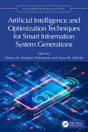
Causal Artificial Intelligence (CAI) represents a significant advancement in the development of AI systems, marking a shift from purely correlation-based models to those capable of understanding and reasoning cause-and-effect relationships. In the context of disciplinary and industry development, casual AI addresses critical challenges in AI’s ability to generalize, explain decisions, and make safe interventions across dynamic environments. Its emergence is reshaping fields like healthcare, economics, autonomous systems, and social sciences, offering a more reliable and interpretable form of AI that can predict the effects of actions, simulate outcomes, and inform decision-making more accurately. This book provides a comprehensive exploration of how causal reasoning can enhance the transparency, reliability, and ethical foundations of artificial intelligence systems. Addressing both theoretical and practical dimensions, it examines structural causal models, explainable AI, and privacy-preserving learning frameworks across diverse fields, including healthcare, climate science, manufacturing, automotive safety, and cybersecurity. It highlights innovative research in areas such as CNN-based causal inference for signal detection, explainable mobile AI for disease prediction, image processing for Ayurvedic material identification, and AI-driven systems for driver fatigue and collision detection. By bridging theoretical foundations with real-world applications, this book serves as a valuable resource for researchers, practitioners, and policymakers committed to developing transparent, secure, reliable, and ethically aligned intelligent technologies.
Readers will find the volume:
- Offers a deep dive into frameworks like structural causal models (SCMs), Bayesian networks, and do-calculus, allowing readers to explore how AI systems can identify and leverage cause-and-effect relationships;
- Emphasizes real-world applications of causal artificial intelligence through detailed case studies in fields such as healthcare, economics, and autonomous systems;
- Illustrates how causal models are applied in complex, dynamic environments, demonstrating casual AI’s potential to revolutionize industries by providing actionable insights;
- Focuses on the ethical implications and interpretability of AI systems built on causal reasoning.
Audience
AI researchers, data scientists, academics, industry professionals, business leaders, medical researchers, and policymakers interested in advancing from traditional machine learning techniques to causal models.
콘텐츠 둘러보기
저자 정보
Rajdeep Chakraborty, PhD is a Professor in the Computer Science and Engineering Department at SAGE University, Indore, Madhya Pradesh, India, with two decades of teaching and research experience. He has made notable contributions through various publications, including patents, books, journal articles, and conference papers. His interests include cryptography, network security, Internet of Things, and blockchain.
Aleem Ali, PhD is a Professor and Research Coordinator in the Department of Computer Science and Engineering at Chandigarh University, Punjab, India. With over 17 years of academic and research experience, he has established himself as a leading contributor in the areas of Internet of Things, artificial intelligence, machine and deep learning, and network security. He has an extensive research portfolio with more than 65 peer-reviewed publications in reputed journals and conferences and six books.
Amit Paul, PhD is an Associate Professor of Computer Science and Engineering at St. Thomas’ College of Engineering and Technology, Kolkata, India. He has authored five journal articles and seven international conference papers. His research centers on causal inference and interpretable machine learning for biomedical applications.
Nawaf R. Alharbe, PhD is a Professor in the College of Computer Science and Engineering at Taibah University in Saudi Arabia. He has more than 20 publications in international journals and conferences of repute. His interests include knowledge management systems in smart healthcare operations using emerging technologies such as RFID, ZigBee, Internet of Things (IoT), and cloud computing.
S. Balamurugan, PhD is the Director of Intelligent Research Consultancy Services, Coimbatore, India. He has published more than 70 books, 300 articles in international and national journals and conferences, and 300 patents. He is a research consultant for many companies, startups, SMEs, and MSMEs.